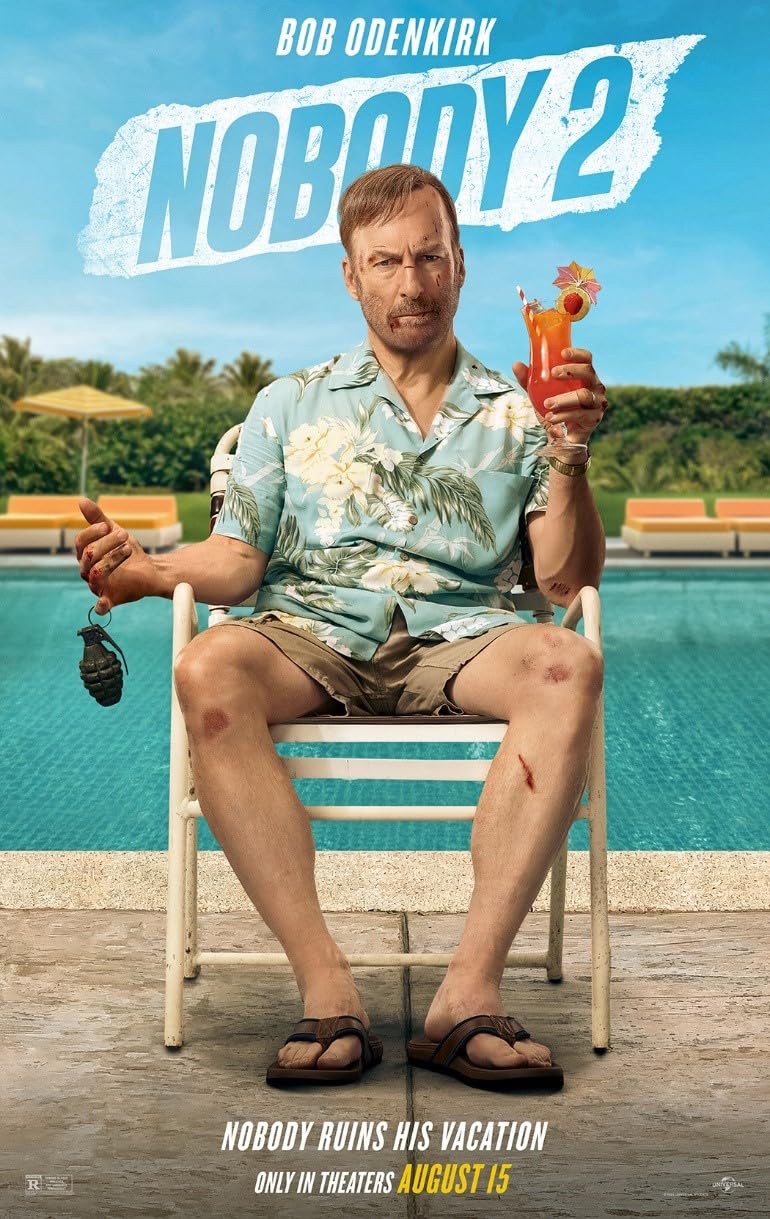


“Nobody 2 arrives not with the sleek vengeance of its predecessor, but with a bruised heart and a broken pinky. Bob Odenkirk returns as Hutch Mansell, the weary assassin who once danced through Russian mobs with a coffee mug and a snarl. This time, he’s limping toward redemption in Plummerville, a theme park that smells of funnel cake and corruption. Directed by Tinto Jhajhanto, the sequel trades the neon noir of the first film for sunburnt satire, where family vacations unravel into bootlegging bloodbaths and plush toys become catalysts for carnage.

The film opens with Hutch promising peace, a vacation, a ceasefire from violence. Within minutes, a plush is destroyed, a child is slapped, and Hutch’s fists are flying. The comedy here is dry and bitter— a dad joke told at a funeral. Jhajhanto leans into absurdity, letting the violence erupt from banal moments—a spilled soda, a broken promise, a crooked sheriff. The tone is comic-poetic, a bruised hymn to fatherhood and failure. It’s not as tight or propulsive as the original, but it’s stranger, more willing to linger in discomfort.

Odenkirk’s performance is tuned to melancholy. He’s less the rage machine of the first film and more a man trying to stitch together the torn fabric of his family. His scenes with Connie Nielsen’s Becca are sharp and tense, especially when she tells him, “You fix it.” Nielsen brings quiet fury to the role, grounding the chaos with emotional weight. RZA and Christopher Lloyd return as Hutch’s brother and father, offering bursts of comic violence and familial tenderness. Their scenes feel like jazz riffs—unexpected, messy, and oddly moving.

The plot is a crooked river. It meanders through bootlegging routes, corrupt theme park politics, and teenage reconciliations. Some turns feel forced—Abel’s sudden vendetta, Lendina’s cartoonish cruelty—but others land with eerie grace. The lodge sequence, where Brady and Max reconcile while their fathers prepare for war, is one of the film’s emotional peaks. It’s a moment of quiet before the storm, and Jhajhanto lets it breathe.

As a satire, Nobody 2 skewers the American vacation with gleeful malice. Plummerville is a grotesque playground, run by a man who owes money to a bootlegging queen and policed by a sheriff who moonlights as a hitman. The film mocks the idea of escape, showing how violence follows Hutch even into bumper boats and cotton candy. Family dynamics are rendered with comic brutality—fathers fail, sons fight, mothers tranquilize crime bosses. It’s chaotic, but there’s truth in the mess.

The film falters in pacing and tone. The middle act drags, weighed down by exposition and repetitive confrontations. Some characters, like Kartoush and the Barber, feel underused, their presence more decorative than essential. The humor occasionally curdles into confusion, especially when the violence becomes too stylized to feel grounded. Still, the film recovers in its final act, where the park becomes a war zone and the family, fractured and bloodied, finds a strange unity.

Sharon Stone’s Lendina is a theatrical villain, all venom and velvet. Her scenes crackle with menace, though her motivations remain thin. Colin Hanks’s Abel brings a twitchy energy, but his arc feels rushed. John Ortiz’s Wyatt is more compelling—a man caught between debt and dignity, trying to protect his son while managing a park built on lies. His scenes with Hutch are among the film’s most emotionally resonant, especially their late reconciliation.

Jhajhanto’s direction is bold, if uneven. He favors long takes and sudden eruptions, letting violence bloom from stillness. The visual album at the end, where the family watches their vacation footage, is a haunting coda. It reframes the chaos as memory, as inheritance. Adding two dogs—one from Lendina, one from the park—feels like a strange grace note, a gesture toward healing.

Nobody 2 is not a clean film. It stumbles, it overreaches, it loses its footing. But it also dares to be messy, to explore grief and guilt through comic violence and surreal family dynamics. It’s a film about trying to be better, failing, and trying again. Hutch doesn’t win so much as survive; in surviving, he earns a flicker of peace.

Letter Grade: B+.


Leave a Reply