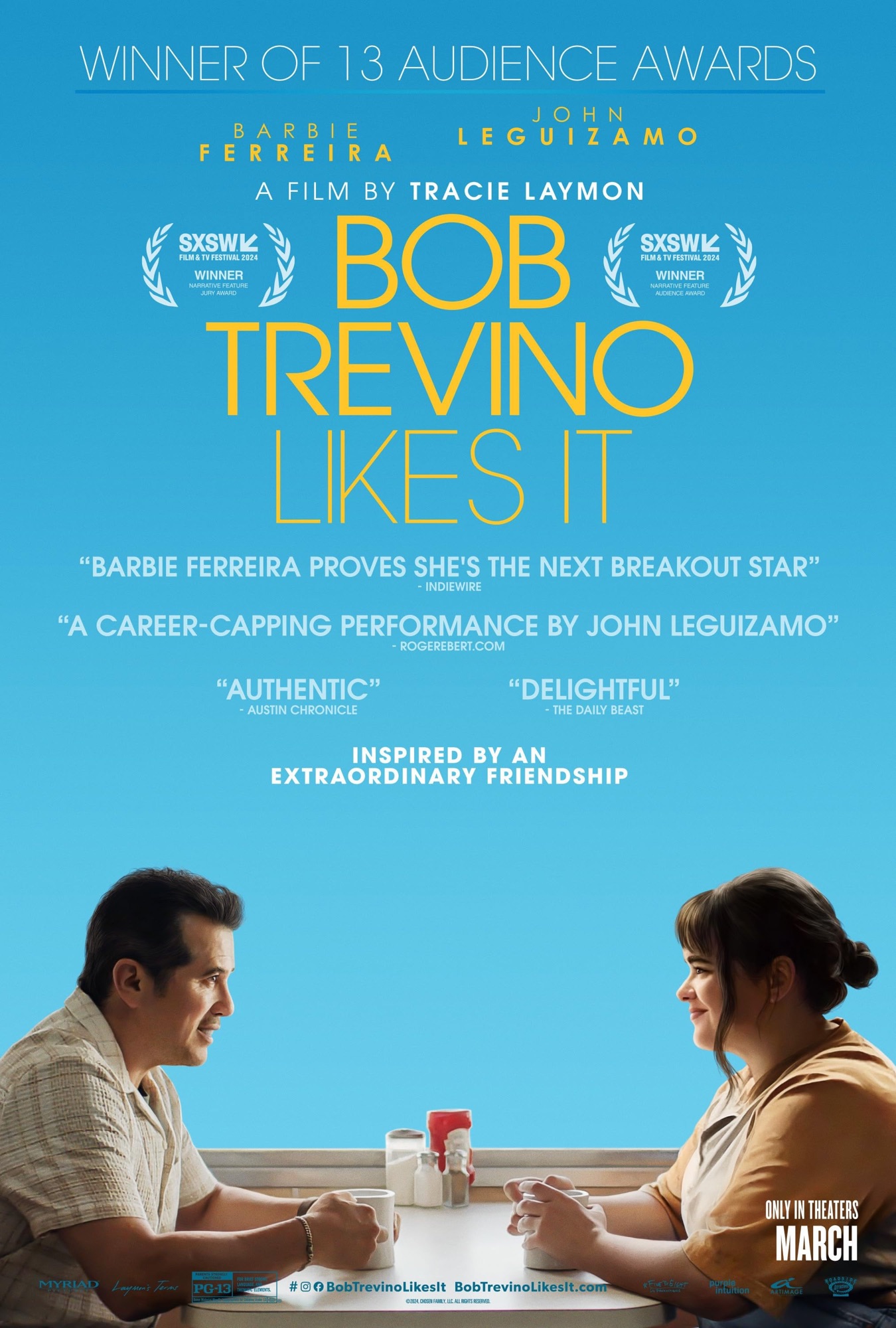


There’s a strange tenderness in Bob Trevino Likes It, a film that stumbles through grief, estrangement, and digital connection with more heart than polish. Directed by Tracie Laymon, it’s a story that doesn’t always know where it’s going, but it walks with such sincerity that you forgive the detours. It’s a movie about finding family in the wrong places, and how sometimes the wrong place is exactly where you need to be.

Barbie Ferreira plays Lily Trevino with a kind of bruised clarity—her performance is raw, unguarded, and often heartbreaking. She doesn’t reach for pity, and the film doesn’t hand it to her. Instead, it lets her navigate abandonment, emotional neglect, and the ache of being unchosen with quiet dignity. John Leguizamo, as the wrong Bob Trevino, is a revelation. He plays kindness like it’s a muscle that’s been asleep too long, and watching it wake up is one of the film’s great pleasures.

The plot is a patchwork of emotional beats—some land, some don’t. The early scenes with Lily’s biological father (played with oily charm by French Stewart) veer into caricature, and the tonal shifts between comedy and trauma can feel abrupt. But when the film settles into the rhythm of Lily and Bob’s friendship, it finds its soul. Their scenes together—fixing toilets, watching meteor showers, sharing coffee—are small, but they carry weight. They’re the kind of moments that don’t ask to be remembered but end up staying with you.

Laymon’s direction is gentle, sometimes too gentle. There are moments that cry out for sharper pacing or more visual tension, especially in the film’s middle stretch. But she knows how to hold a scene long enough for emotion to bloom, and that patience pays off in the final act. The scrapbook reveal, the Perseids, the shelter visit—these are scenes that earn their tears without begging for them.

The theme of chosen family is well-worn, but Bob Trevino Likes It gives it a fresh coat of emotional specificity. It’s not just about finding someone who cares—it’s about being seen, being remembered, being held in a story that isn’t yours but becomes yours anyway. The film doesn’t resolve Lily’s pain, and it doesn’t villainize her father beyond what’s necessary. It lets grief be messy, and healing be partial.

Compared to other films in the “found family” genre—The Station Agent, Kodachrome, The Fundamentals of Caring—this one is less polished but more emotionally direct. It doesn’t try to be quirky or profound. It just tries to be honest. And that honesty, even when uneven, is its strength.

The cast is used well, though some supporting roles feel underwritten. Rachel Bay Jones as Jeannie brings quiet grace, and Lolo Spencer as Daphne is a scene-stealer, grounding Lily’s world with humor and warmth. French Stewart’s performance, while effective in its cruelty, could have used more nuance. But the central duo carries the film, and their chemistry is undeniable.

The film misses sometimes—dialogue that feels too on-the-nose, pacing that drags, emotional beats that don’t quite crescendo. But it also hits, and when it does, it hits with feeling. It’s a movie that believes in kindness, even when kindness is clumsy or late.

Bob Trevino Likes It is not perfect, but it’s deeply felt. It’s a story that knows how to ache, and how to offer a hand anyway.

Letter Grade: A-. Streaming on Hulu.


Leave a Reply