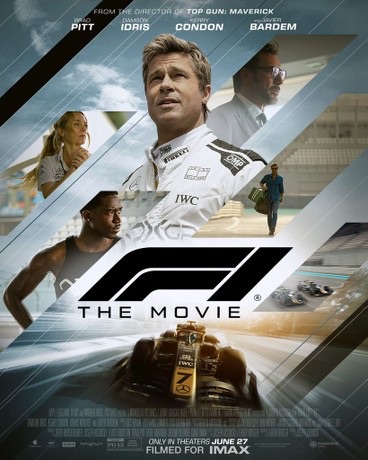


Joseph Kosinski’s F1 barrels down the tarmac with chrome-bright ambition and fire in its gears. At its best, it’s a cinematic rush—an ode to velocity, reinvention, and the strange poetry of rubber peeling off asphalt at 200 miles per hour. But under the hood, not everything purrs as smoothly as the film hopes. While Brad Pitt’s return to the track has undeniable appeal, the film occasionally slips into the same skid it tries to outrun: myth over momentum.

Pitt’s Sonny Hayes is all grit and gravitas, a weather-beaten relic of Formula One’s heyday with nothing left to prove and everything to reclaim. His portrayal is magnetically watchable, even if the script sometimes leans too heavily on racing clichés. His scenes behind the wheel shimmer with quiet intensity—but in the quieter moments, the film struggles to let his silence say enough.

Damson Idris injects the film with necessary heat as Joshua Pearce, the rookie phenom saddled with talent, pressure, and too many mentors. Idris plays him with seething composure, giving the film its truest edge. The tension between Hayes and Pearce promises drama but resolves too cleanly, leaving us craving more hairpin turns in their relationship.

Javier Bardem brings oily charm to Ruben Cervantes, the former driver now herding egos as APXGP’s team boss. While Bardem’s charisma is undeniable, the film doesn’t fully explore the tension between ambition and memory that his character suggests. Kerry Condon fares better as Kate McKenna, the quietly brilliant engineer holding the team together with wrenches and will. She’s given little screen time, but she makes it matter.

The race sequences are where F1 comes closest to transcendence. Kosinski delivers these with kinetic precision—ground-hugging shots, heartbeat editing, sound design that rattles your bones. But the spectacle sometimes overrides the story. The plot flattens into montage, and dramatic stakes blur beneath the roar of engines. It looks stunning. It just doesn’t always feel urgent.

The film flirts with themes of redemption, legacy, and mentorship, but rarely deepens them beyond surface tension. Kim Bodnia as Kaspar Smolinski, Hayes’ long-estranged rival, offers a moment of rough tenderness that hints at what the film could have been: a meditation on past wounds still racing in circles.

Tobias Menzies brings bureaucratic cool as Peter Banning, the ever-watchful presence from the FIA. His stern balance to the chaos is appreciated, but his storyline is underused, leaving us with more questions than narrative payoff.

In its final stretch, F1 crosses the finish line with style, if not full emotional resonance. The ending is more exhale than eruption—earned, maybe, but not wholly satisfying. The checkered flag falls, but the dust hasn’t settled on what this film wants to mean.

In its final stretch, F1 crosses the finish line with style, if not full emotional resonance. The ending is more exhale than eruption—earned, maybe, but not wholly satisfying. The checkered flag falls, but the dust hasn’t settled on what this film wants to mean.

A stylish, pulse-pounding ride with moments of genuine power, but a few corners left unturned. F1 thrills when it roars but idles in its quieter laps. Still, with a compelling cast and visceral visuals, it earns its place on the podium, just not at the top step.

Final Grade: B+


Leave a Reply