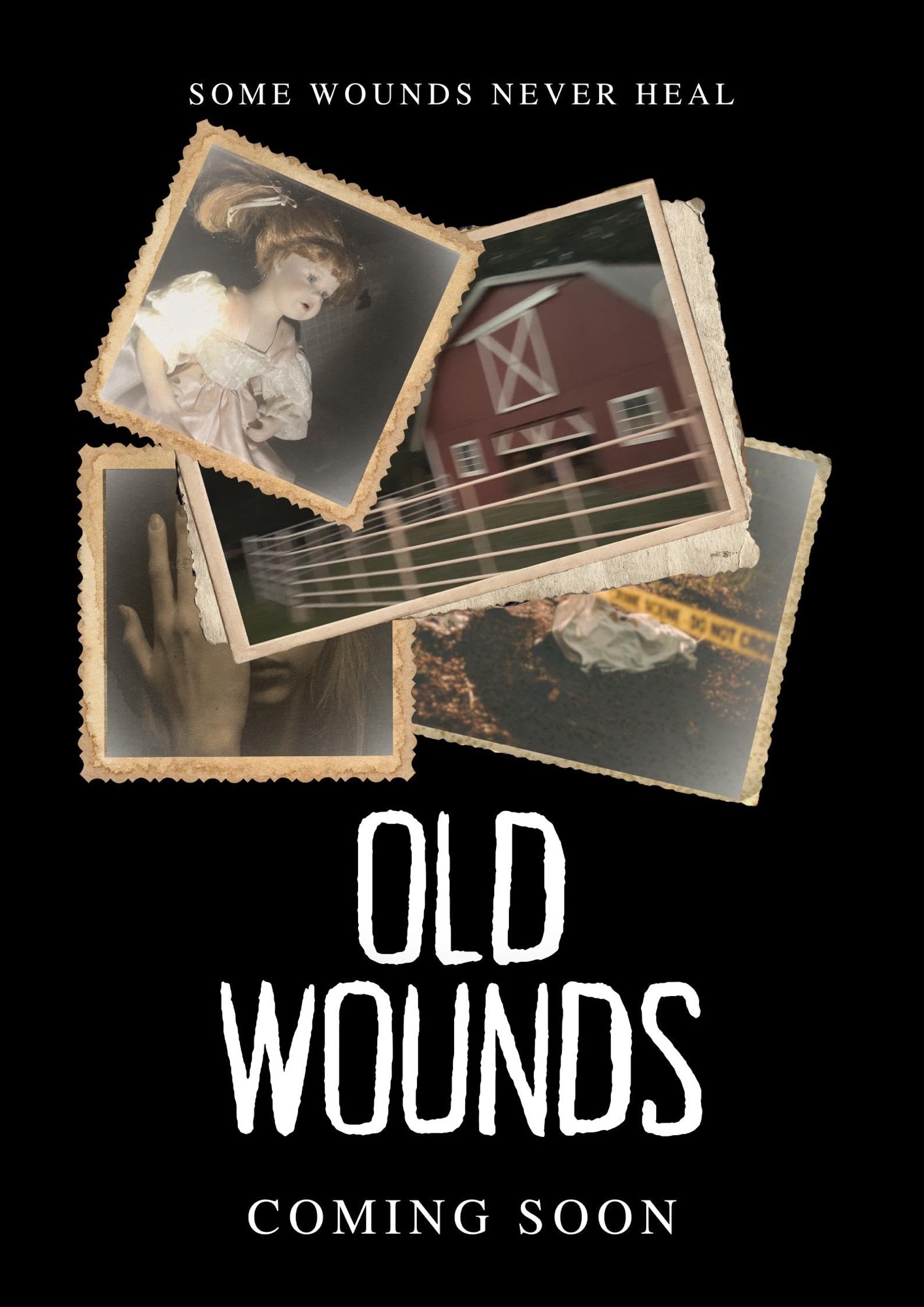


In the tremor before a word is spoken, Old Wounds begins—shaky, intimate, already too close. The screen pulses with breath, not score. The light is soft with intent, like the hush before a wound reopens. Director Steven Hugh Nelson does not ask us to suspend disbelief—he quietly informs us we’re already inside the story, that belief is no longer a choice. His debut feature, co-written with his co-stars Chelsey Grant and Brian Villalobos, offers not merely a narrative but a séance of intimacy and suspicion.
Steve and Ashley are lovers caught between youth’s optimism and memory’s decay. They road-trip through pastoral quiet into something far less innocent: Ashley’s childhood home, remote and half-repaired, a house that remembers more than it says. Steve, ever the aspiring auteur, captures it all on his iPhone—not to preserve joy, we suspect, but to understand it as it unravels. His lens, slick with affection and naivety, doesn’t yet realize it is not the only one watching.

There’s something beneath the idyll—a rustling presence among the branches, another eye blinking from the dark. Soon we realize: Steve’s digital warmth is being shadowed by analog rot. Someone else is making a film, too. The visuals degrade. The frame flutters. From the grain of hidden cameras comes a voyeuristic chill, grainy and off-rhythm, like history peeking through wallpaper. It’s not found footage—it’s haunted film.
The performances, wonderfully unvarnished, ache with familiarity. Nelson plays Steve as a boy trying to earn trust through appeasement, all awkward charm and apology. Grant’s Ashley feels hardened but not closed, her tenderness guarded like a memory of music. And then there’s Villalobos as Graham, the stranger who never stops twitching—even when smiling. His presence stains the room like old smoke, and every line he speaks feels like a question you’d rather not answer.
As realism bleeds into paranoia, Old Wounds fuses tension with silence. Conversations stretch too long. Glances linger. A knock lasts half a second too many. It’s here that the film’s slow-burn excels—not by screaming, but by unsettling the familiar, by making friendship feel suspect, and vulnerability unsafe. Even the simplest gestures become rituals of dread.
The dual-camera conceit is more than clever; it’s mythic. As if the story is being told not by one narrator, but two—one dreaming, one remembering. The contrast in quality becomes contrast in truth: polished present against degraded memory. What we see is not what’s happening. What happened may not be what we recall. Reality slips like water through the cracks of an old barn door.
And oh, that barn. It leans like a question mark at the edge of Ashley’s ancestral land, filled with the detritus of lives unspoken. It is the spine of the film—a place where narratives collapse, where secrets are stored in rust. Coupled with the isolation of the homestead, the untouched woods, and the absence of score, the setting turns from backdrop to crucible. It doesn’t house the horror. It is the horror.
The climax—briefly tinted by strings and shadow—risks disorienting its audience with tonal drift. But the risk works. That final jolt of cinematic artifice reminds us: this is a film, after all. But it’s also a trap. Whether you find the ending satisfying or jagged, it bites deep. The ambiguity lingers, and you emerge marked, unsure what bled on screen and what merely bled through it.
Old Wounds is found footage made flesh—beautifully mundane, intimately horrific. In its best moments, it doesn’t feel written or directed, but remembered. Or relived. It is a story told from two cameras and four corners of doubt. The horror is not what’s shown—it’s the gap between what’s recorded and what’s believed. And in that eerie dissonance, Nelson’s debut sings a crooked lullaby of trust and trespass.
Final Grade: **B+.**. A film that doesn’t explain its scars. It lets them speak.


Leave a Reply