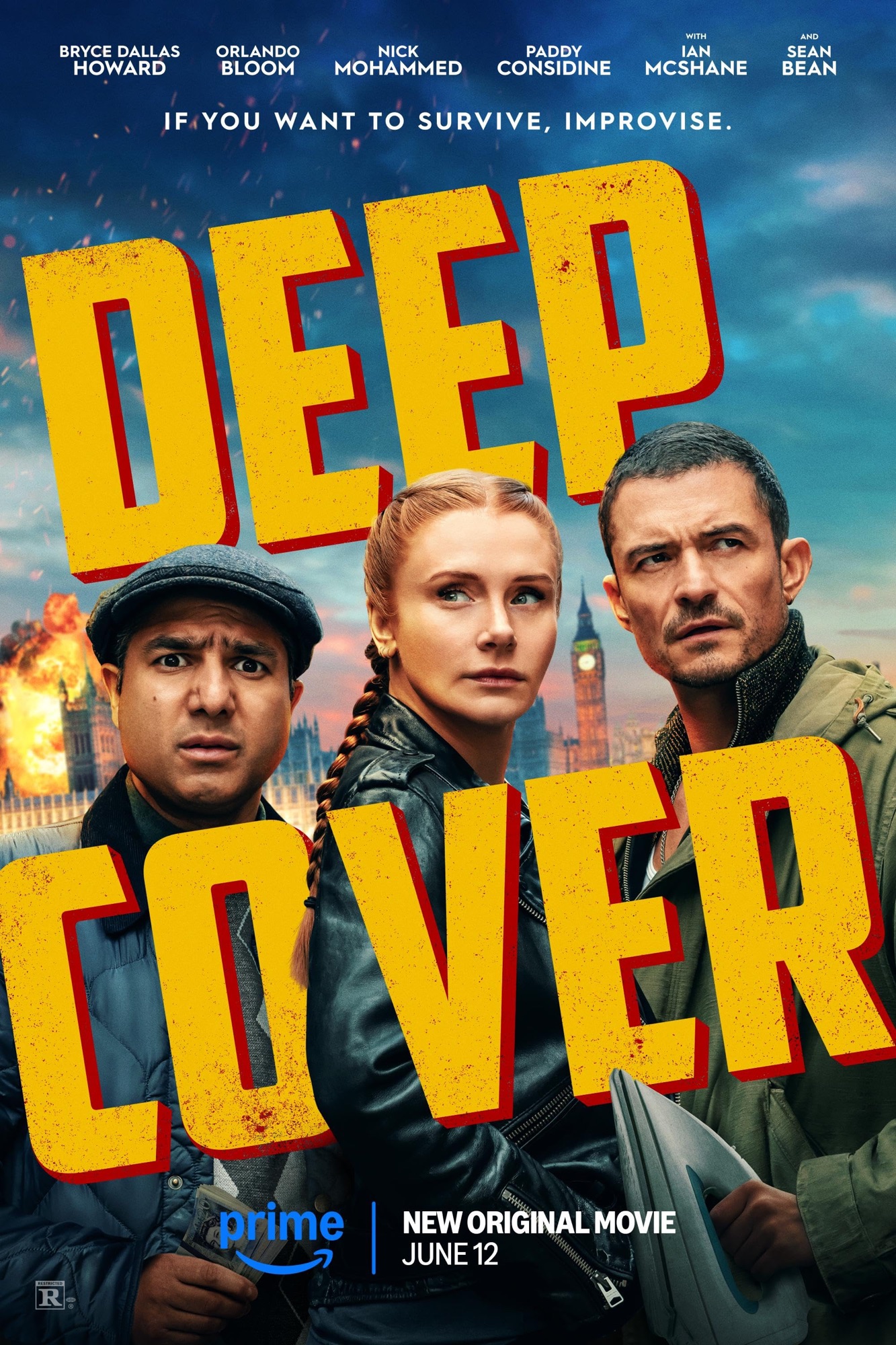


The first rule of a good cover: don’t blink. In *Deep Cover*, Bryce Dallas Howard’s eyes are steady as cut glass, sharp enough to split a lie clean down the middle. She moves through the neon-lit underworld like a ghost in borrowed skin, playing a role so well that she forgets where she ends and the mask begins. Draped in shadow and charisma, Orlando Bloom plays the wildcard—the reluctant accomplice, the man who thought he had everything under control until the world tipped sideways. Directed with a slick, mercurial touch by Tom Kingsley, this film is a labyrinth of deception, double crosses, and breathless tension that doesn’t let go until the credits roll.

It starts like all good cons do—with a name whispered in a backroom, a promise of something that should be impossible. Howard’s character, Sarah Kane, isn’t supposed to be in this world. She’s supposed to be something else: an investigator, an agent with clean hands. But when the right offer lands in her lap—one last job, one last twist—she can’t bring herself to say no. Bloom’s Richard Langton, a former grifter turned businessman with too many skeletons rattling in his closet, is the key. And the lock? A fortune hidden beneath layers of greed and blood.

The film plays out like a symphony of misdirection. Conversations are laced with double meanings. Every glance is a risk, every step a potential pitfall. Howard and Bloom move like dancers in a game rigged from the start. Their chemistry crackles, not with romance, but with the desperate understanding of two people who know they’re only one mistake away from losing everything. Kingsley frames every moment precisely, letting the neon city breathe like a living thing—beautiful, venomous, and ever-watchful.

The humor comes not in punchlines but in the absurdity of survival. The way Bloom rolls his eyes when their carefully planned ruse goes sideways, or how Howard manages to talk her way out of disaster with a single well-placed smirk. There’s a rhythm to the madness, an understanding that even in the worst situations, the con artists and the thieves find a way to make the tension feel like a dance.

But beneath the surface, *Deep Cover* isn’t just about the crime. It’s about identity—what happens when you play the role for so long that it starts to feel real. Howard’s Sarah grapples with that. The longer she plays the game, the harder it becomes to remember what she believed in before. Bloom’s Richard, for all his bravado, isn’t immune either. He’s spent his life remaking himself, but at some point, he lost track of who he was before the lies.

The plot twists with the elegance of a magician’s sleight of hand. Just when it seems like they’ve won, the rug is pulled. When it looks like they’ve lost, a hidden ace appears. The supporting cast—scheming crime lords, desperate informants, cops playing their own game—add depth without distraction. Every character has a secret, every secret a price.

And when the final act crashes into place, the tension is suffocating. The last score, betrayal, and moment before everything collapses. Kingsley ensures that the climax isn’t just spectacle—it’s consequence. The weight of choices made in the dark. The realization that survival isn’t always victory.

The ending doesn’t tie things in a neat bow because *Deep Cover* isn’t about neat resolutions. It’s about the cost of playing pretend in a world that doesn’t forgive mistakes. The film lingers, the echoes of footsteps on rain-slick pavement, the taste of a lie too well told to take back.

Stylish, innovative, and endlessly slick, Deep Cover is a lesson in tension, deception, and the fine art of staying one step ahead. The stakes are high, the players unforgettable, and the game is worth watching.

Final Grade: **B+.** Streaming on Amazon Prime.


Leave a Reply