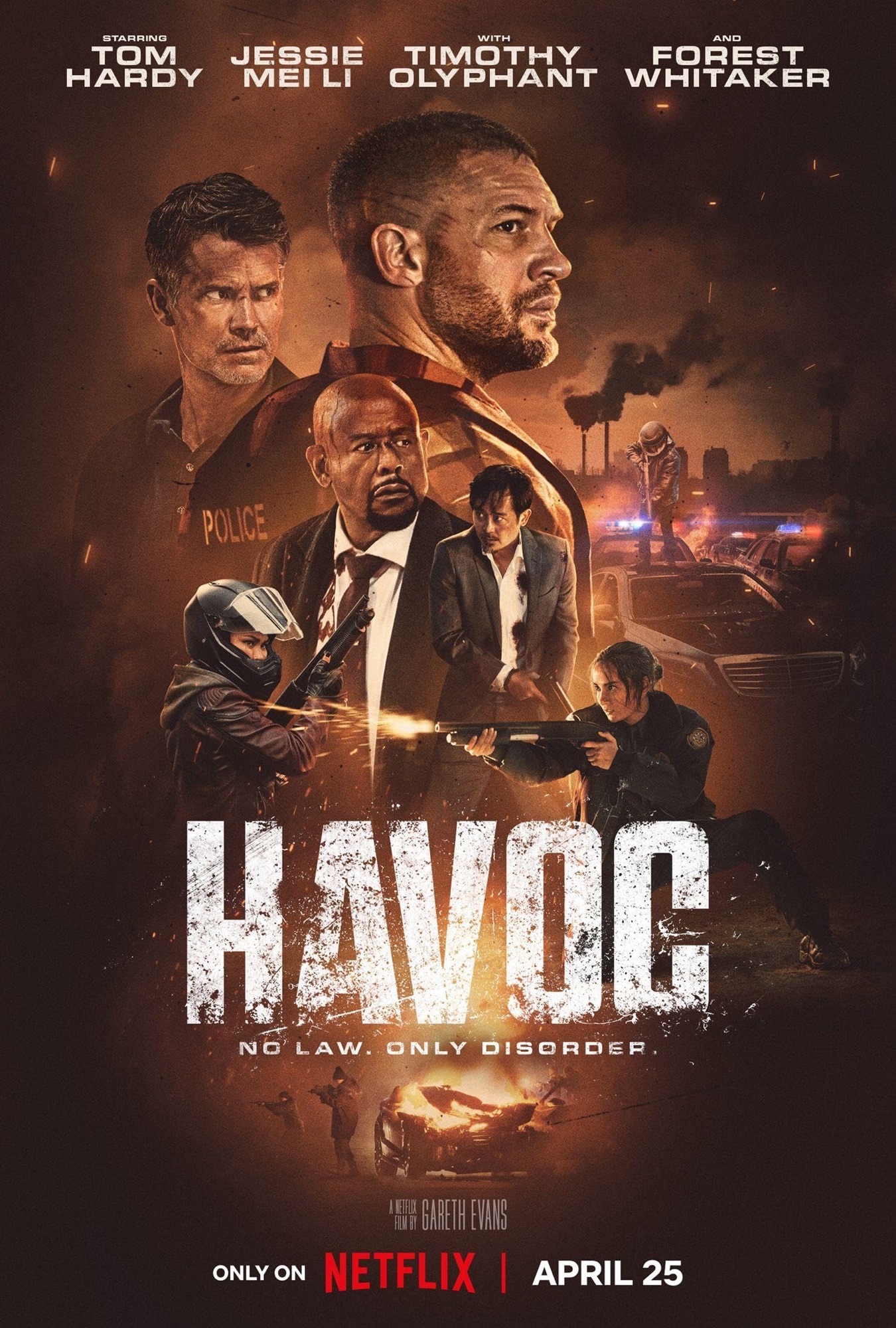


Gareth Evans‘ *Havoc*, featuring a compelling performance by Tom Hardy, immerses audiences in a grim world marked by profound moral decay, relentless action, and the elusive nature of redemption. Set against the backdrop of a rain-soaked, unnamed metropolis, the film follows Wilson, a weary and disillusioned cop entangled in a labyrinth of corruption and escalating violence. As he navigates this treacherous landscape, his quest for justice becomes increasingly perilous, testing his physical limits and moral compass.

Evans employs his signature directorial style, crafting meticulously choreographed action sequences that are both breathtaking and brutal. The film’s pacing is relentless, keeping viewers on the edge of their seats as Wilson confronts adversaries and grapples with his internal struggles. The cinematography enhances the sense of urgency and despair, enveloping viewers in a visceral cinematic experience that is both exhilarating and exhausting. In *Havoc*, the pursuit of redemption is fraught with challenges, inviting audiences to ponder the cost of justice in a world where the lines between right and wrong are significantly blurred.

The narrative begins with Wilson’s reflective voiceover, which is steeped in regret and moral ambiguity as he contemplates the choices that have led him to this moment. A failed drug deal catalyzes the unfolding story, thrusting Wilson into a chaotic world that intertwines his fate with that of a young couple, Mia and Charlie.

As the plot unfolds, the film explores themes of survival and justice in a gritty landscape where moral clarity is elusive and often overshadowed by desperation. Wilson’s journey forces him to confront the consequences of his actions and the complexities of the human experience in a lawless environment. However, the relentless pacing of the narrative sometimes detracts from the opportunity for deeper character exploration, leaving the viewer with a sense that the rich emotional lives of the characters are only partially realized. Throughout the film, the bold choices made by each character propel the story forward, creating a tense atmosphere filled with uncertainty and moral fallity.

Tom Hardy delivers a powerful and nuanced performance as Wilson, effectively using his physicality and emotional depth to create a relatable character. He captures the essence of Wilson’s struggles, embodying his physical weariness and the deep emotional scars that shape his journey throughout the film. Quelin Sepulveda shines as Mia, bringing a quiet yet formidable resilience to her role. Mia serves as the emotional heart of the story, navigating her challenges while providing a grounding presence for Wilson.

Meanwhile, supporting actors Timothy Olyphant and Forest Whitaker lend their notable gravitas to the film, although their roles feel somewhat underexplored. Both actors bring a wealth of experience and talent, but their characters lack sufficient development, leaving viewers wanting deeper engagement and more scenes that showcase their abilities. Overall, the film’s strength lies in its lead performances, but the potential of its supporting cast suggests a richer narrative that could have been further realized.

The standout feature of *Havoc* is its meticulously crafted action sequences, which elevate the film to an exciting new level. Each set piece is designed with precision, showcasing a variety of intense moments that keep the audience on the edge of their seats. The visceral intensity of the fights, particularly in the neon-soaked nightclub, is expertly choreographed to highlight the combat’s brutality and artistry. Similarly, the high-speed truck chase is an excellent lesson in tension and pacing, combining thrilling action with close calls that leave viewers breathless.

Matt Flannery’s cinematography plays a crucial role in enhancing these action sequences, employing dynamic camera movements and stark visual contrasts that emphasize the film’s gritty tone. The interplay of light and shadow not only creates a sense of urgency but also immerses the audience in the chaotic world inhabited by the characters. Together, the choreography and cinematography in *Havoc* showcase director Gareth Evans’ profound expertise in staging chaos.

The action sequences and immersive atmosphere are standout elements of the experience, featuring impressive choreography and special effects that fully engage the senses. However, the storytelling aspect leaves much to be desired. The world-building feels minimal, failing to create a rich and believable universe that could captivate viewers and draw them into the narrative. Without a well-developed setting, the stakes feel low, and the audience lacks a sense of investment in the story’s outcome.

Furthermore, the characters are not sufficiently developed; they lack compelling backstories or nuanced motivations that could foster emotional connections with the audience. This absence of depth makes it difficult for viewers to care about their journeys or struggles, resulting in a hollow narrative. Consequently, many may long for deeper, more resonant stories that reflect personal experiences and provoke thoughtful reflection.

While the relentless pace of the plot is undeniably thrilling and expertly maintains a high level of adrenaline, it can also feel overwhelmingly chaotic. The constant barrage of intense action and violence may lead audiences to a state of numbness, as there is little opportunity for quiet moments or character development to provide balance or pause. This frenetic energy, although engaging, risks overshadowing the potential for a more meaningful and impactful storytelling experience.

*Havoc* is an intense and gripping action thriller that showcases the directorial talent of Gareth Evans, renowned for his ability to create visceral cinematic experiences that captivate audiences from beginning to end. While the film has some narrative flaws—such as occasional plot holes and underdeveloped character arcs—it more than makes up for these shortcomings with its electrifying action sequences, which are visually stunning and adrenaline-pumping.

Tom Hardy delivers a nuanced performance, effectively capturing the complexities of his character and adding depth to the high-octane storyline. For die-hard fans of the action genre, *Havoc* is certainly worth watching. However, those looking for deeper substance may find themselves wanting more depth amid the thrilling visuals and explosive sequences. Overall, the film embodies what makes action cinema enjoyable, even if it doesn’t entirely meet every narrative expectation.

Grade: B+. Streaming on Netflix.


Leave a Reply