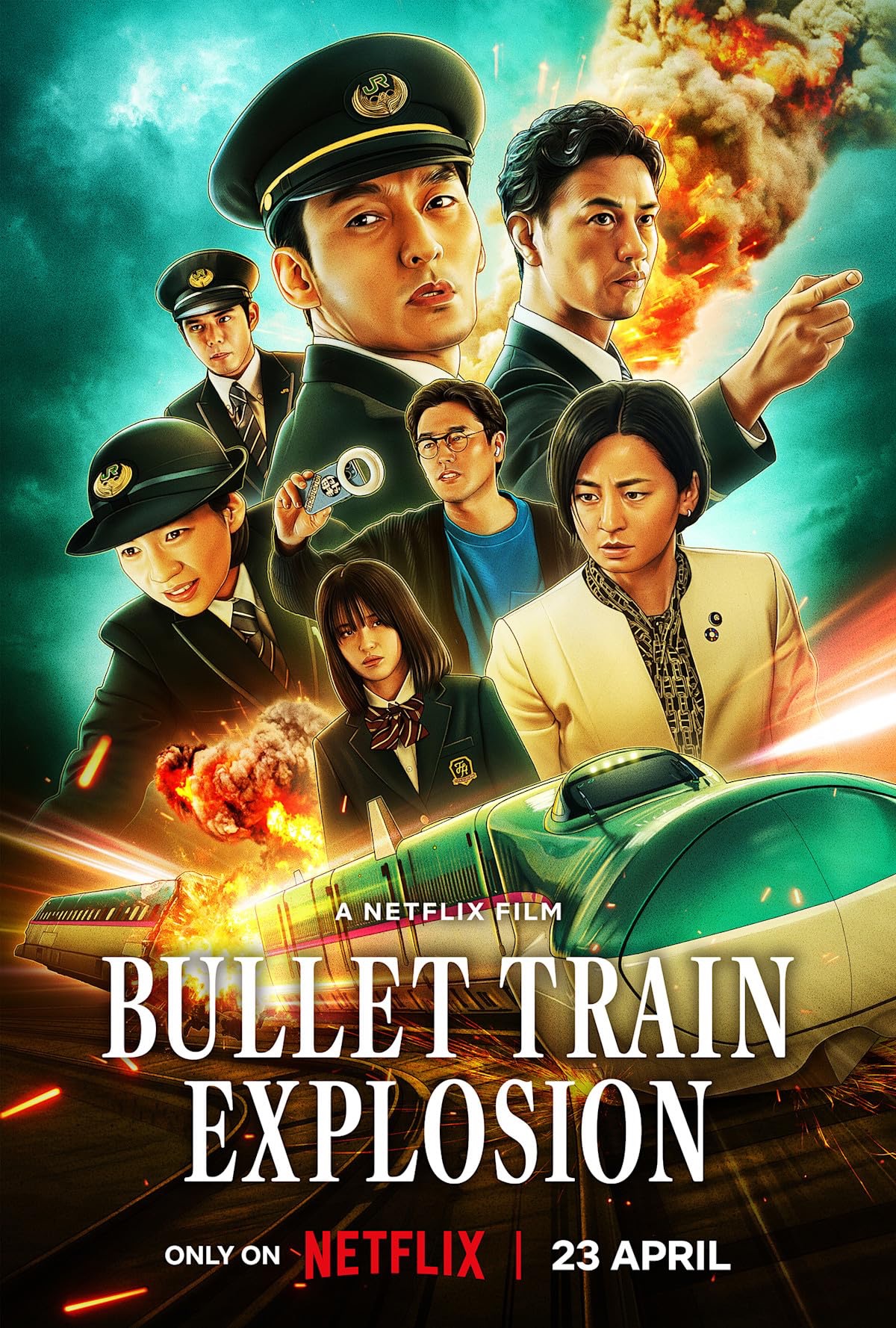


Shinji Higuchi’s The Bullet Train Explosion revives and reinvigorates Junya Sato’s 1975 classic by merging elements of high-stakes action with profound character introspection. Now streaming on Netflix, this film operates on dual levels as both a sequel and a thoughtful remake, skillfully paying tribute to its predecessor while broadening the story’s thematic depth and emotional resonance.

Higuchi, acclaimed for his work on *Shin Godzilla* and *Shin Ultraman,* demonstrates his unique ability to weave together ensemble storytelling with stunning visual effects. From heart-pounding train chases to moments of quiet reflection, the film captures the tension and urgency of its setting while delving into the character’s inner struggles and motivations. With a keen eye for detail, Higuchi crafts a narrative that resonates with contemporary audiences, making *The Bullet Train Explosion* a thrilling cinematic experience and a poignant exploration of human resilience and connection in the face of chaos.

The story takes place on the Hayabusa No. 60 Shinkansen, which is traveling from Shin-Aomori to Tokyo. A bomb will explode if the train’s speed drops below 100 km/h. The terrorist demands a ransom of 100 billion yen, which must be crowd-funded by the passengers. This situation forces the conductor, Kazuya Takaichi (played by Tsuyoshi Kusanagi), and his crew to deal with bureaucratic obstacles, political interference, and escalating panic as they strive to prevent a disaster. Higuchi creates intense suspense with fast pacing and introduces moral complexity as passengers face difficult ethical choices during the crisis.

Higuchi’s adaptation contrasts Sato’s original, the foundation for the Hollywood classic *Speed.* While Sato’s 1975 film delivers a more measured, character-centric narrative that intricately explores the socio-economic struggles of post-war Japan, Higuchi accelerates the pace, enriching the action and visual spectacle. His version, however, does not abandon the thematic core of the original; instead, it delves deeper into the concepts of duty, honor, and the complexities of human experience.

In this reimagining, the bombers are not portrayed merely as one-dimensional villains; rather, they emerge as multifaceted characters shaped by personal tragedies and the broader systemic failures of society. This approach invites viewers to empathize with their motivations, fostering a sense of reflection on the societal issues underlying their actions. By presenting a more nuanced portrayal of both the antagonists and the victims, Higuchi transcends conventional action genre tropes, transforming the narrative into a rich meditation on the contemporary Japanese psyche. The result is a film that not only entertains but also challenges audiences to consider the intricate interplay between personal responsibility and social context.

The film intricately explores the theme of collective versus individual responsibility, a cornerstone of Japanese culture. As the passengers—representing a rich tapestry of social backgrounds and experiences—grapple with a series of moral dilemmas, their decisions force them to confront their values amidst a chaotic situation. Simultaneously, political leaders are depicted as making harrowing choices, weighing the value of human lives against the broader national interests at stake.

Director Higuchi masterfully infuses the narrative with a profound sense of Christian compassion, skillfully portraying the motivations of the antagonists alongside the sacrifices of the victims. This portrayal reveals how their fates are interconnected, weaving a complex tapestry that illustrates the shared humanity in their struggles. The rich moral complexity embedded in *The Bullet Train Explosion* elevates it from mere entertainment; it emerges as a deeply philosophical work that challenges viewers to reflect on their own ethical frameworks and the societal implications of their choices.

Higuchi’s direction displays a remarkable visual artistry that masterfully captures the relentless speed and inherent danger of the Shinkansen. The train operates not just as a mode of transportation. Still, it transforms into a powerful symbol, representing the unstoppable momentum of fate, the weight of duty, and the indomitable spirit of human resilience. How Higuchi contrasts intense action sequences with moments of profound introspection enriches the storytelling, allowing audiences to immerse themselves in the narrative entirely. This seamless balance between heart-pounding thrills and quiet reflection invites viewers to ponder the deeper themes at play, creating an experience that resonates both emotionally and intellectuUltimately, *The Bullet Train Explosion* transcends the boundaries of a typical action-packed blockbuster; it delves deeply into the complexities of the human condition when faced with extraordinary circumstances.

Director Higuchi has masterfully crafted a narrative that serves as a worthy successor to Sato’s beloved classic and stands out as an innovative and distinct piece in its own right. The film weaves together gripping action sequences with meaningful character development, exploring themes of resilience, sacrifice, and the fragility of life. Viewers are entertained by the heart-pounding moments and invited to reflect on what it means to endure and overcome in the face of adversity. Through meticulous storytelling and striking visuals, *The Bullet Train Explosion* is a significant entry into contemporary cinema.

This fine film intricately weaves heart-stopping suspense with profound thematic exploration, establishing itself as a thrilling journey and a compelling meditation on concepts such as duty, compassion, and survival. The narrative masterfully engages viewers, inviting them to grapple with the moral dilemmas faced by the characters, which adds layers of complexity to the fast-paced action.

In addition to its gripping storyline, the film’s cultural impact is significant, influencing discussions surrounding social responsibility and ethical decision-making in modern society. The director’s artistic choices, from striking visual compositions to a haunting score, amplify the narrative’s emotional weight, inviting audiences to immerse themselves fully in the experience.

Grade:** A. Streaming on Netflix.


Leave a Reply