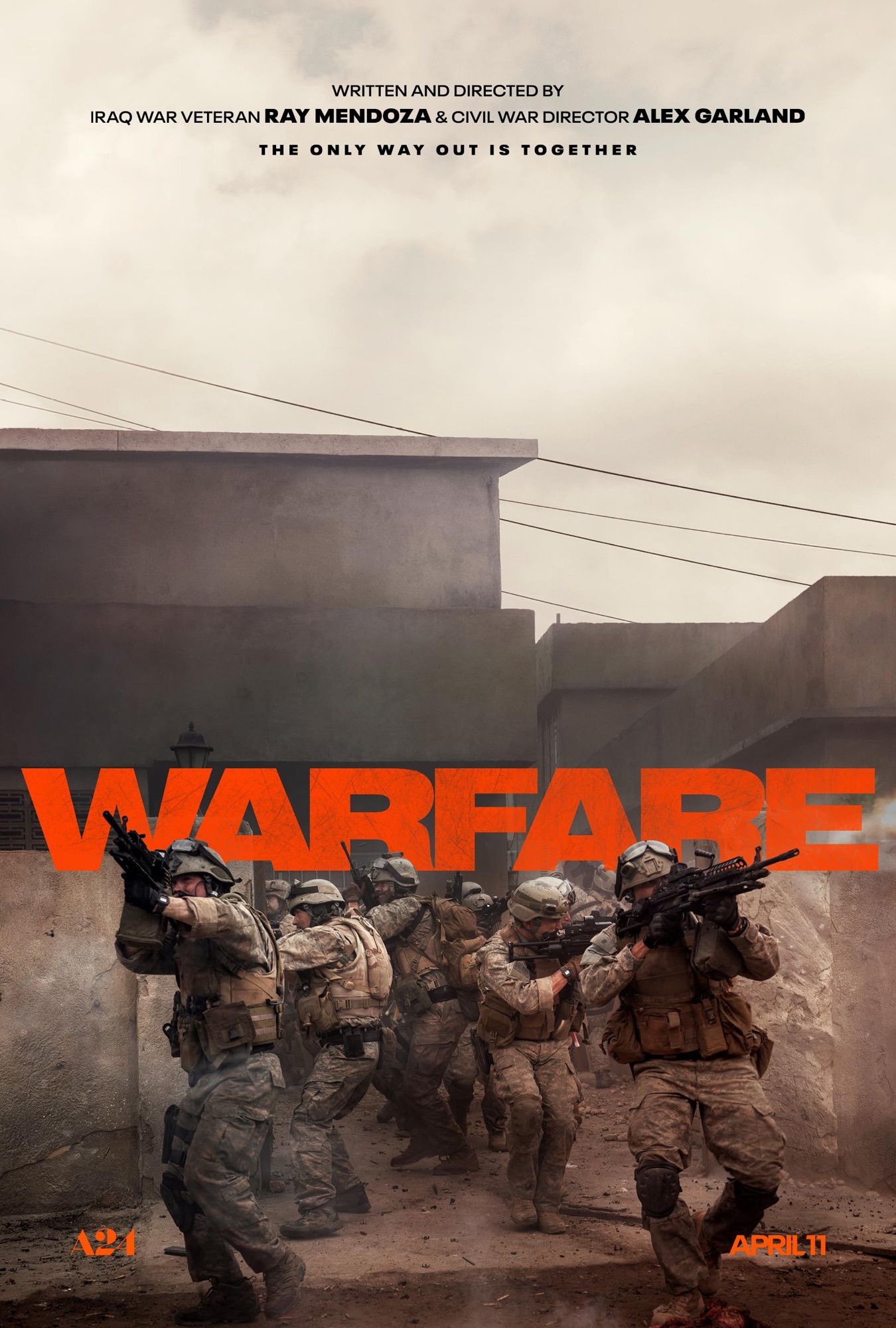


Alex Garland‘s “Warfare,” co-directed with Iraq War veteran Ray Mendoza, offers a raw and unfiltered look into the chaos of modern combat. The film does not shy away from the harsh realities; instead, it immerses the audience in the dust and blood of Ramadi, Iraq, where a surveillance mission descends into a nightmare. Garland and Mendoza remove the typical Hollywood gloss, presenting the grit and grime of war as it unfolds in real-time.

The story is stark and almost brutally simple. A platoon of Navy SEALs, caught in the crossfire during a mission gone awry, fights for survival. There is no space for heroics or sentimentality—just the harsh reality of staying alive. Garland’s decision to forgo backstories or personal arcs feels intentional, compelling viewers to confront the anonymity of both war’s victims and survivors.

The film’s visuals create a vivid battlefield experience. The cinematography immerses you in the claustrophobic spaces of crumbling buildings and smoke-filled streets. Extended takes and drone footage add an unsettling sense of immediacy, making you feel you’re right alongside the SEALs, experiencing every intense moment of their mission. The stunning IMAX visuals enhance the film’s impact, but rather than glorifying the violence, they emphasize the horror of the situation.

The sound design is incredibly impactful. Glenn Freemantle creates an auditory landscape that matches the intensity of the visuals. Explosions, gunfire, and the unsettling silence between battles are all portrayed with brutal precision. The lack of a musical score makes you feel vulnerable, with only the chaotic sounds of war to fill the emptiness.

The performances are raw and visceral. D’Pharaoh Woon-A-Tai, Will Poulter, and Cosmo Jarvis effectively capture the exhaustion and camaraderie of soldiers in intense situations. Their portrayals are subtle, steering clear of melodrama, to provide an authentic depiction of men pushed to their limits.

Critics may argue that the film’s lack of character depth makes it feel cold, but that’s intentional. “Warfare” is not focused on individuals; it explores the collective experience of war and the shared trauma that binds and breaks those who endure it.

Garland and Mendoza are firmly committed to realism in their work. By portraying events precisely as they occurred, drawing from Mendoza’s memories, the film refrains from adding any editorial commentary. While this approach may alienate viewers who prefer a conventional narrative, it highlights the harsh truth of war: it is indifferent to personal stories.

Garland’s direction is precise, marking a departure from his more stylized works, such as “Annihilation.” He swaps visual poetry for stark realism in this film, showcasing his versatility as a filmmaker. Mendoza’s firsthand experience brings an undeniable authenticity, grounding the film in the harsh realities of combat.

“Warfare” is an intense and unyielding depiction of the horrors of war. It does not seek sympathy or provide easy answers—it demands your attention and leaves you wrestling with its truths.

Grade: A.


Leave a Reply