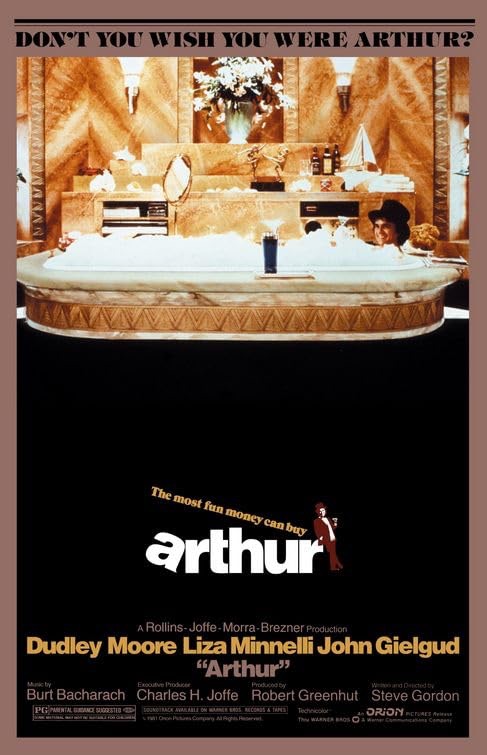


Steve Gordon‘s *Arthur* (1981) is a delightful mix of laughs and touching moments. It stars Dudley Moore in a his star-making role as the lovable, always tipsy millionaire Arthur Bach. Moore brings the character to life, making him charming and a bit reckless, which pulled me into his extravagant, chaotic world. Alongside him is Liza Minnelli as Linda, a spirited, working-class woman who unexpectedly captures Arthur’s heart. Their chemistry creates an excellent contrast to his wealthy background. When *Arthur* was released in 1981, it won over audiences with its clever dialogue and charming character interactions. The film’s romantic plot was fun, delving into themes of love, responsibility, and the search for real connections in a superficial world. Two Academy Awards highlighted its popularity, one of which went to John Gielgud for Best Supporting Actor. His portrayal of Hobson, the witty and wise butler, was a standout.
Hobson serves as a source of humor and a moral compass for Arthur, guiding him through his self-indulgent tendencies with wit and wisdom..

What Still Works
Dudley Moore’s performance as Arthur is delightful. He brings a unique charm to the character, turning what could have been just another spoiled playboy into someone I really connected with. His struggles and quirky lifestyle made him relatable and captivating. Plus, the chemistry between Moore and Liza Minnelli was magic. Their love story felt authentic, their playful banter and warm interactions real.
John Gielgud’s performance as Hobson is a standout. His sharp wit and comedic talent bring a dry contrasting charm to the film. Those clever one-liners delivered with perfect timing, made me laugh. Hobson acts as both a mentor and a playful contrast to Arthur. With his sarcasm and observations, Gielgud kept me entertained.
Gordon’s screenplay is thoughtful, blending sharp humor with moments that resonate. At the heart is Arthur’s internal conflict: he’s torn between the allure of his carefree lifestyle and his yearning for deeper connections and a greater purpose in life. *Arthur* dives into the ups and downs of love, showcasing it as a potent force that bridges social divides. The connections Arthur forms—through quick encounters or more significant relationships—highlight its theme of human connection and the universal desire to be understood. Each character he meets reflects his own challenges and helps him grow and evolve along the way.
One of the things that made this film touching is its unforgettable theme song, “Arthur’s Theme (Best That You Can Do)” by Christopher Cross. With its lovely melody, the song creates a wave of nostalgia. It enhanced those special moments that explored love, acceptance, and the quest for happiness. Because of this, the film stayed with me.

What Feels Dated
*Arthur* showcases the values and humor of its era and so some elements simply did not resonate with me now. Arthur’s frequent drunkenness is portrayed lightly and humorously, common for the time. A greater understanding of the profound impact of alcoholism has dulled that kind of comedy to me, making Arthur seem a slightly pathetic character.
The film’s over-the-top portrayal of wealth and privilege is intended to be funny and a bit absurd, but it did not resonate with me, especially when conversations about economic inequality are so top of the mind now. The carefree lifestyle depicted in *Arthur* seems disconnected from modern reality.
The gender dynamics in *Arthur* highlights some interesting challenges, especially when I looked at Linda’s role as the “savior” who makes a significant impact on Arthur’s life. While Minnelli portrays Linda as a strong, intelligent, and charismatic character, her development feels a bit limited. Much of her journey is concentrated around helping Arthur grow, which makes her a bit one-dimensional.
She is merely Arthur’s emotional support person, a reminder of the need for changing expectations in women’s representation.

Final Verdict
The performances from the lead actors really stand out, and the film is filled with genuine humor that’s hard not to love. The story has charm and whimsy despite its worn out chauvinism. It’s a fun watch, with an engaging story and characters.
**Grade: B**. Streaming on The Criterion Channel.


Leave a Reply