Tag: philosophical poetry
-

Stones
“Stones” emerged from a walk with my autistic brother, where the gravel beneath us felt like a ledger—each stone a record of what we’ve inherited and what we must carry. I wrote it to honor the physicality of memory and the way lineage shapes our future terrain. The poem resists sentimentality and abstraction, staying grounded…
-
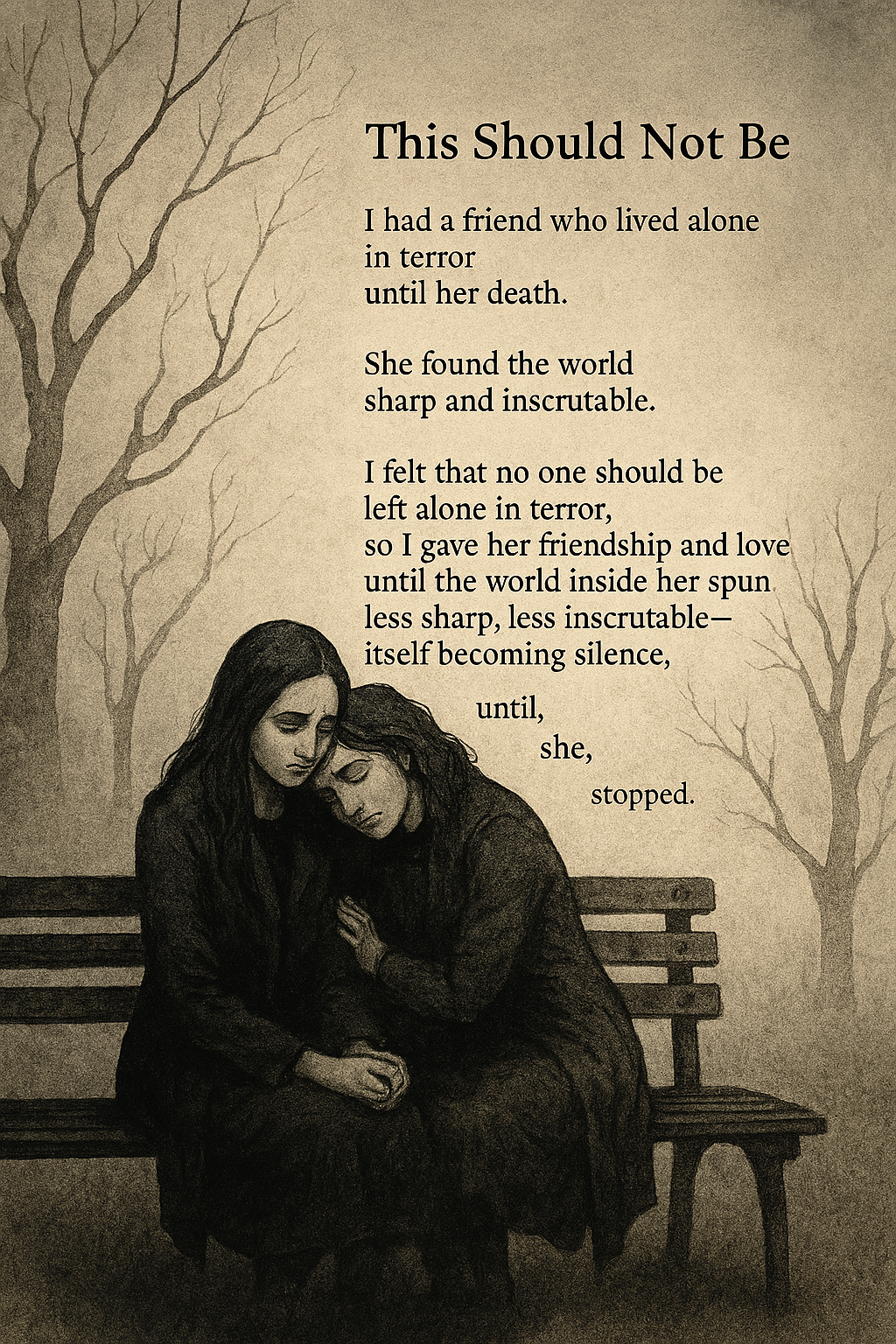
This Should Not Be
This Should Not Be” emerged from a moment of ethical rupture—the unbearable knowledge that someone I loved lived in terror until her death. The poem is not a lament but a ritualized protest. I wanted to write something that refused sentimentality and instead enacted consequence. The repetition of “inscrutable” is deliberate—it marks her being trapped…
-

One Drop
One Drop emerged from a moment of ritual reflection—when memory of language felt like water evaporating into something divine and unreachable. The poem is a meditation on muffled fluency, divine thirst, and the act of waiting. It’s not a lament but a ritual of scarcity, where prayer becomes a gesture of hope and consequence. I…
-
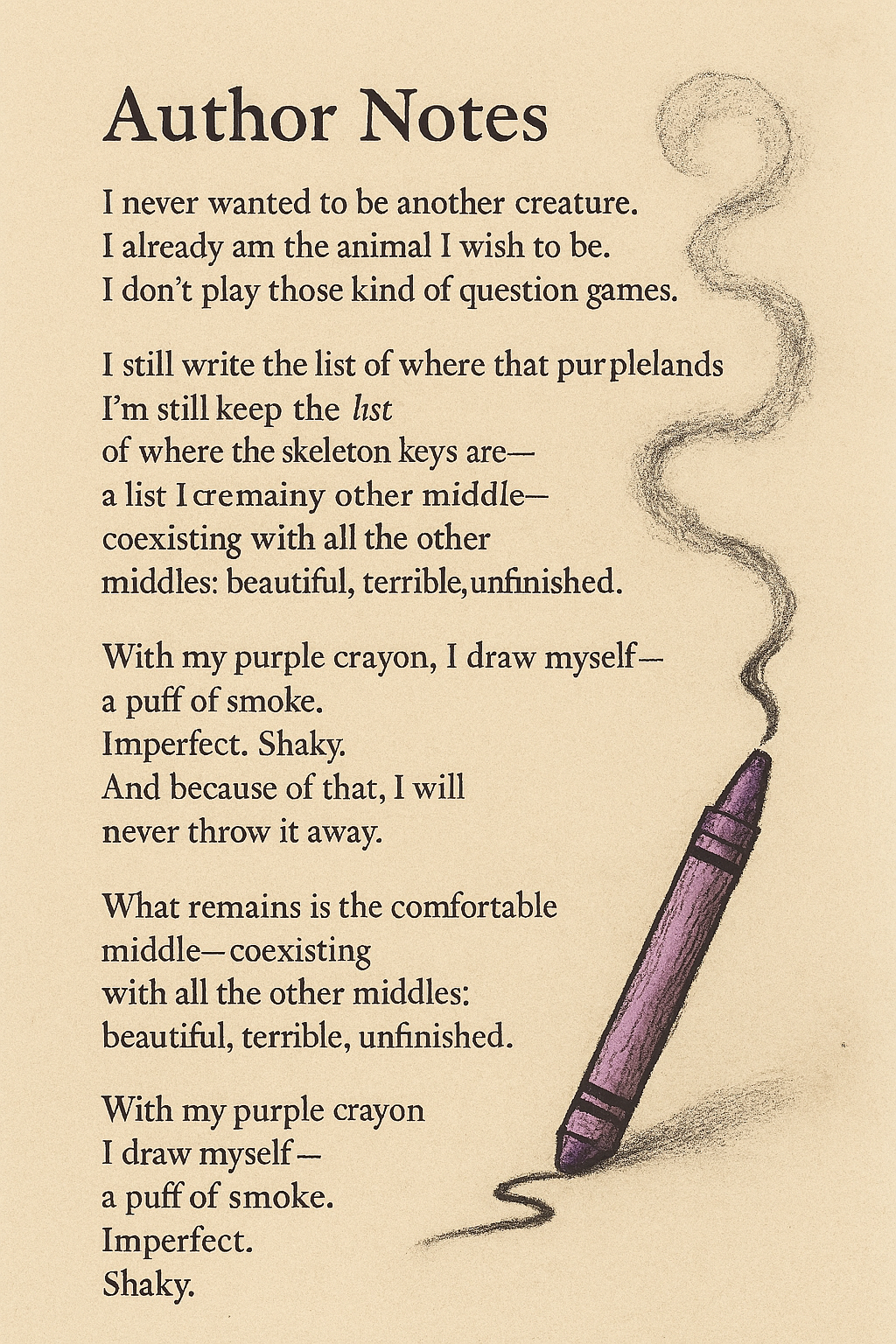
Author Notes
“Author Notes” emerged from a refusal of wanting to answer the the question game—If you were an animal, which would you be? It demands a transformation I do not want to indulge in. It neglects experience and demands transformation. Instead I indulged with the possibilities of Harold’s Purple Crayon. I imagined writing it with my…
-

Sightlines
Sightlines” emerged from a moment of ritual clarity—when my aging eyes, no longer tasked with precision, began to see through blur into beauty. The poem honors the body’s quiet adaptations and the mind’s compensatory grace. It’s a minimalist elegy for vision, a philosophical gesture toward perception as ritual. I wanted to write something that doesn’t…
-

Blue Mercy
“Blue Mercy” began as a quiet observation—a fly, a door, a gesture. But beneath its domestic stillness, I found a philosophical hinge: mercy as both restraint and release. The poem is an allegory of consequence, where the blue swatter becomes a symbol of ethical tension—between intervention and surrender, between light and disappearance. My wife’s presence,…
-
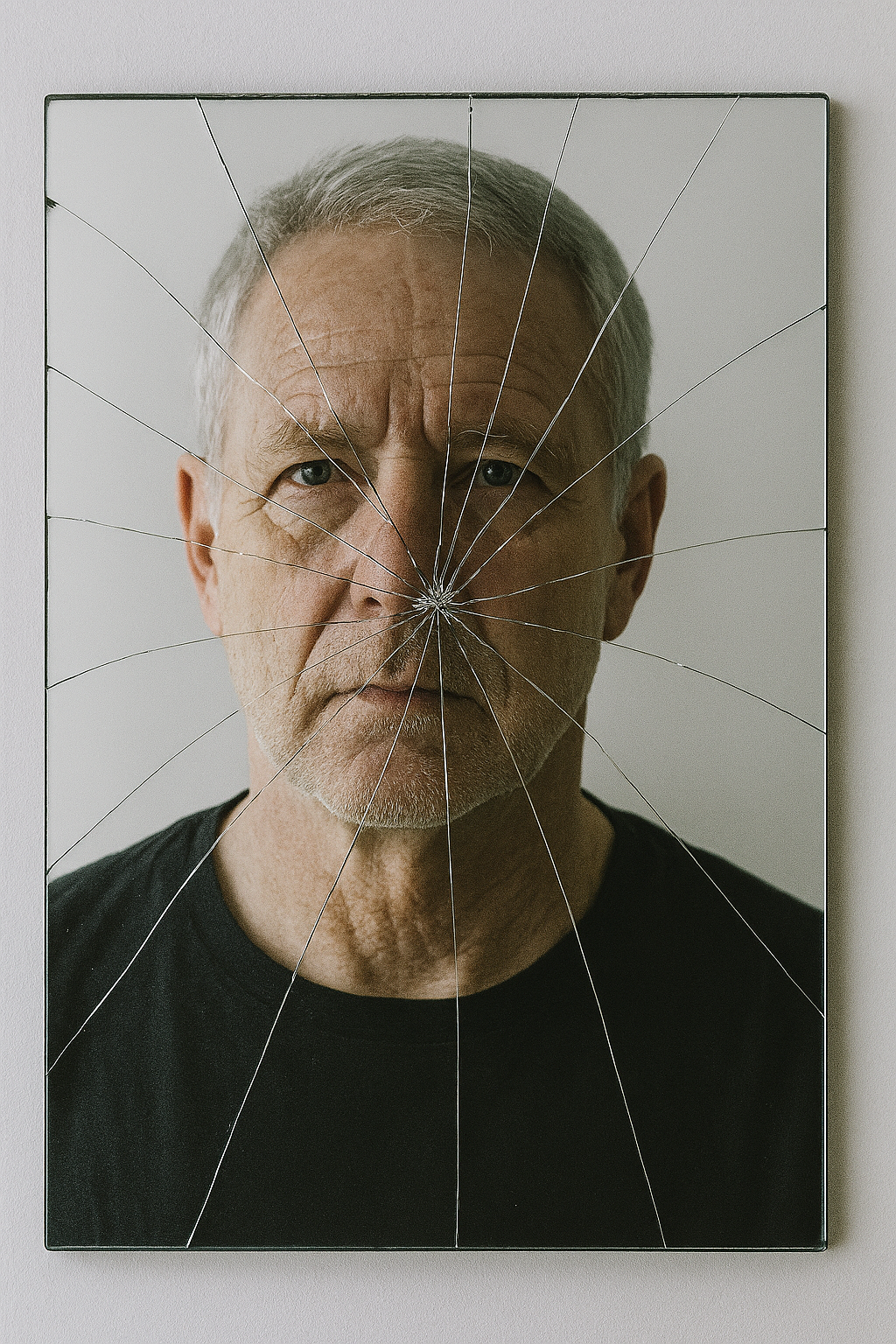
One Face Only
One Face Only began as a quiet refusal. I had just turned seventy and found myself staring into a mirror—not with nostalgia or regret, but with clarity. The poem resists the impulse to chase idealized versions of self. It’s about choosing one flawed reflection over a pile of broken possibilities. The cracked mirror became a…
-

January Dream, 1987
January Dream, 1987 emerged from a dream visitation that blurred grief with peace. My mother, who had died decades earlier, returned in the dream not to ascend, but to sign love into my palm—wordless, tactile, and precise. The poem resists sentimentality and myth, honoring ambiguity and consequence. It’s an American sonnet that turns on ethical…
-

Sunset Visit
“Sunset Visit” emerged during a twilight walk through a cemetery near my childhood home. I was struck not by grief, but by the contrast between the quiet of the dead and the noisy solitude each visitor carried—thoughts, regrets, memories. The poem began as a study in light and stone, but deepened into a meditation on…
-

The Shaker Chair
“The Shaker Chair” began as a meditation on absence—how sacred objects lose their purpose when belief erodes. I was drawn to the Shaker chair as a symbol of readiness, reverence, and silence. The poem inverts that grace, replacing angelic possibility with corporeal desecration. It’s not a condemnation—it’s a witnessing. The man who occupies the chair…
-

When Writing Becomes too Difficult
When Writing Becomes Too Difficult was written as a counterweight to James Sacré’s vision of poetic collapse. I wasn’t interested in rebuttal—I wanted to explore what survives when language fails. The poem is built from gesture, residue, and consequence. It resists metaphor and flourish, favoring domestic precision and ethical witnessing. Its architecture enacts marginality, and…
-

Someone Passes at 8 a.m. and the Birds Do Not Sing
This poem began as a refusal. I wanted to interrogate the cultural impulse to romanticize death—to project meaning onto birdsong, rain, and sunlight in the wake of loss. The poem dismantles these gestures, exposing how metaphor often obscures rather than reveals. It’s not an elegy. It’s a critique of elegy. The theme is not grief…
-

Flight Track
Flight Track began as a meditation on the quiet obsession of watching a plane’s progress across a screen. I was drawn to the emotional architecture of measurement—how altitude, speed, and descent become metaphors for survival. The poem uses restraint and ritual to explore what it means to track motion without touching it, and how even…