Tag: narrative ethics
-
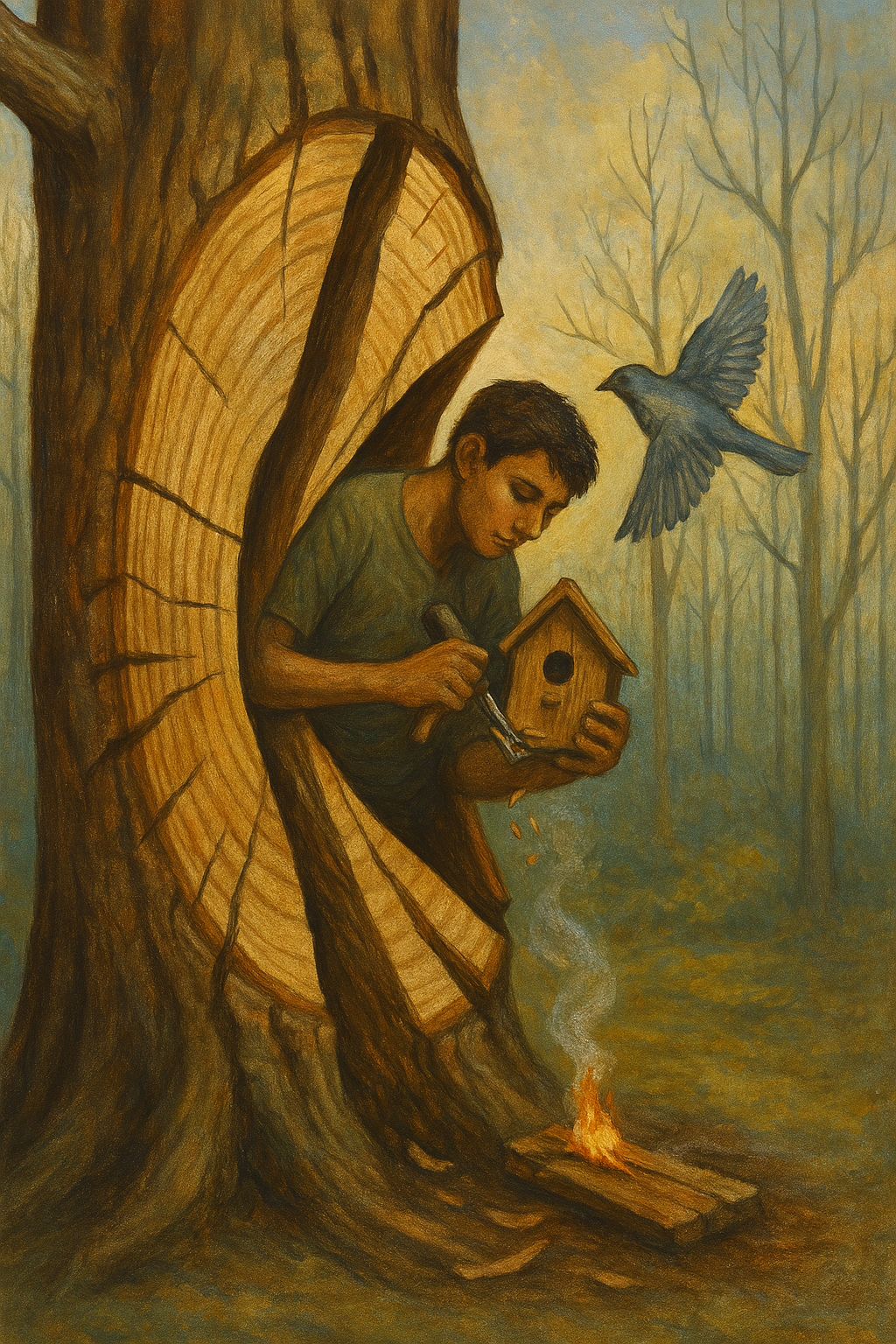
Reclamation Song
Reclamation Song emerged from my refusal to inherit grief as myth. I wanted to write a poem that dismantled lineage without dramatizing it—where the speaker doesn’t mourn but revises. The tree is not metaphor; it’s archive, reliquary, and burden. Each stanza performs a gesture: excavation, disinheritance, refusal, and rebuilding. I invoked Tsi’yugunsini to align with…
-

The Shaker Chair
“The Shaker Chair” began as a meditation on absence—how sacred objects lose their purpose when belief erodes. I was drawn to the Shaker chair as a symbol of readiness, reverence, and silence. The poem inverts that grace, replacing angelic possibility with corporeal desecration. It’s not a condemnation—it’s a witnessing. The man who occupies the chair…
-

When Writing Becomes too Difficult
When Writing Becomes Too Difficult was written as a counterweight to James Sacré’s vision of poetic collapse. I wasn’t interested in rebuttal—I wanted to explore what survives when language fails. The poem is built from gesture, residue, and consequence. It resists metaphor and flourish, favoring domestic precision and ethical witnessing. Its architecture enacts marginality, and…