Tag: grief poem
-

The Dress
This poem began with the image of a man holding a dress in a dim room, an object behaving as both memory and disguise. Its theme is how clothing can momentarily alter the body’s outline and expose what grief refuses to say.
-

Elegy for a Future Death
Elegy for a Future Death began as a refusal. I wanted to write an elegy that didn’t console, didn’t mythologize, didn’t reach for metaphor. The poem strips away atmosphere and sentiment, leaving only the physical residue of absence: chain, pan, towel, nail. It’s a lyric of erosion—of what remains when return is no longer possible.…
-

J’s Sky
“J’s Sky” emerged from the final moments I shared with someone I loved deeply. I wrote it in the hush that followed her passing, where grief had no metaphor—only gesture. The poem resists sentimentality and instead ritualizes consequence through pared-down language and elemental imagery. The sky becomes a container for ash, not answers. I wanted…
-

Ten Prayer Requests Folded Like Love Notes
This poem began as a private act of grief and ritual—a way to place prayers where no one would find them but God. I wrote it in a shaky, illegible hand, not for clarity but for sincerity. The poem explores themes of sacred concealment, ethical restraint, and the refusal of spectacle. It’s a gesture of…
-
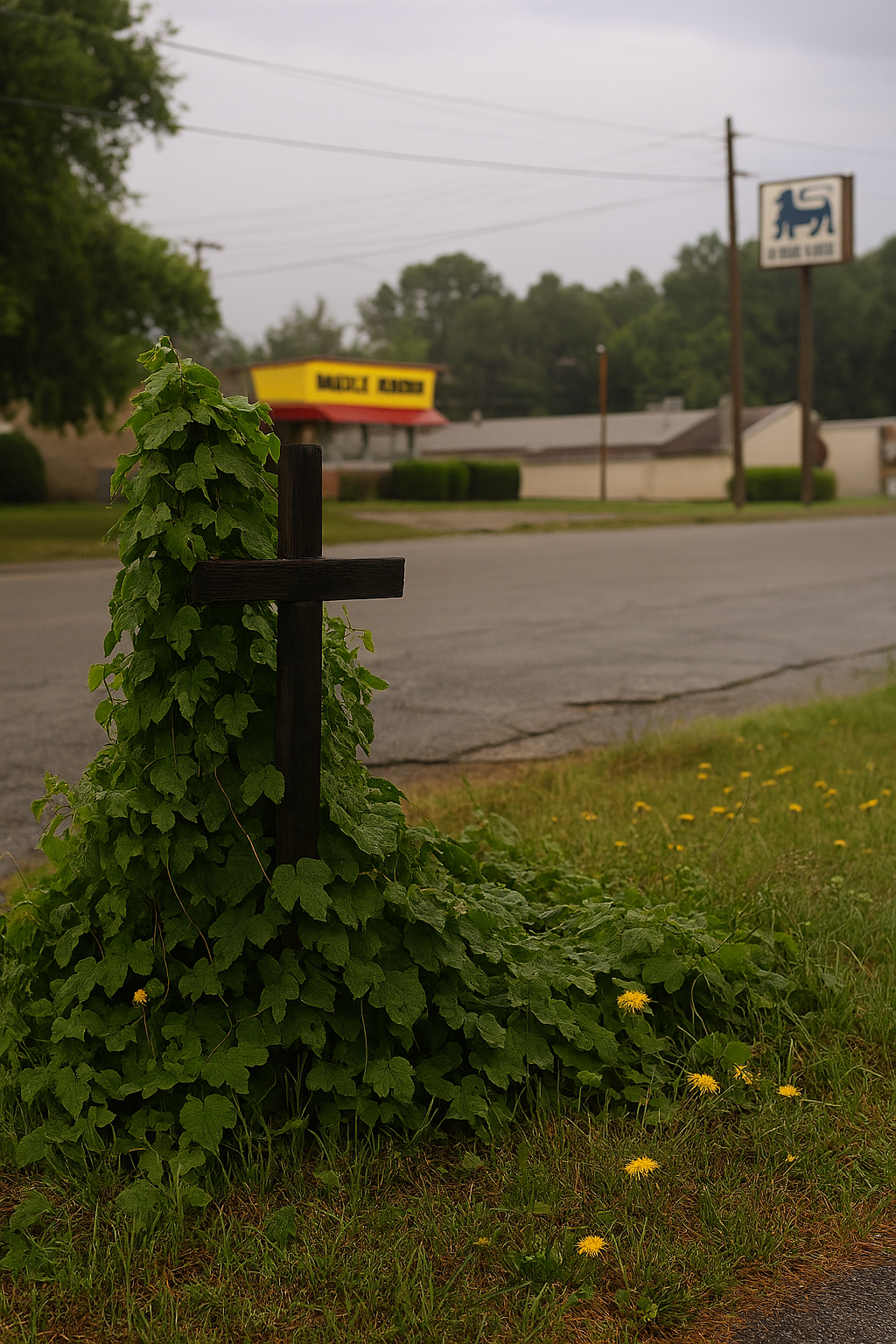
Roadside Cross
Roadside Cross began as a walk with my dog past a forgotten memorial near a Waffle House and Food Lion. What struck me wasn’t just the decay of the cross, but the quiet choreography of grief—how strangers, puddles, rap lyrics, and rain all participated in a ritual of exposure and forgetting. I wanted to write…
-

In My Dreams
In My Dreams began with a letter—brief, bureaucratic, final. It marked the end of a five-year term of benefit payments from my ex-wife’s pension. That document, so stark in its language, carried more than financial closure. It was the formal end of any secular connection between us. I felt a wave of gratitude for her…
-

January Dream, 1987
January Dream, 1987 emerged from a dream visitation that blurred grief with peace. My mother, who had died decades earlier, returned in the dream not to ascend, but to sign love into my palm—wordless, tactile, and precise. The poem resists sentimentality and myth, honoring ambiguity and consequence. It’s an American sonnet that turns on ethical…