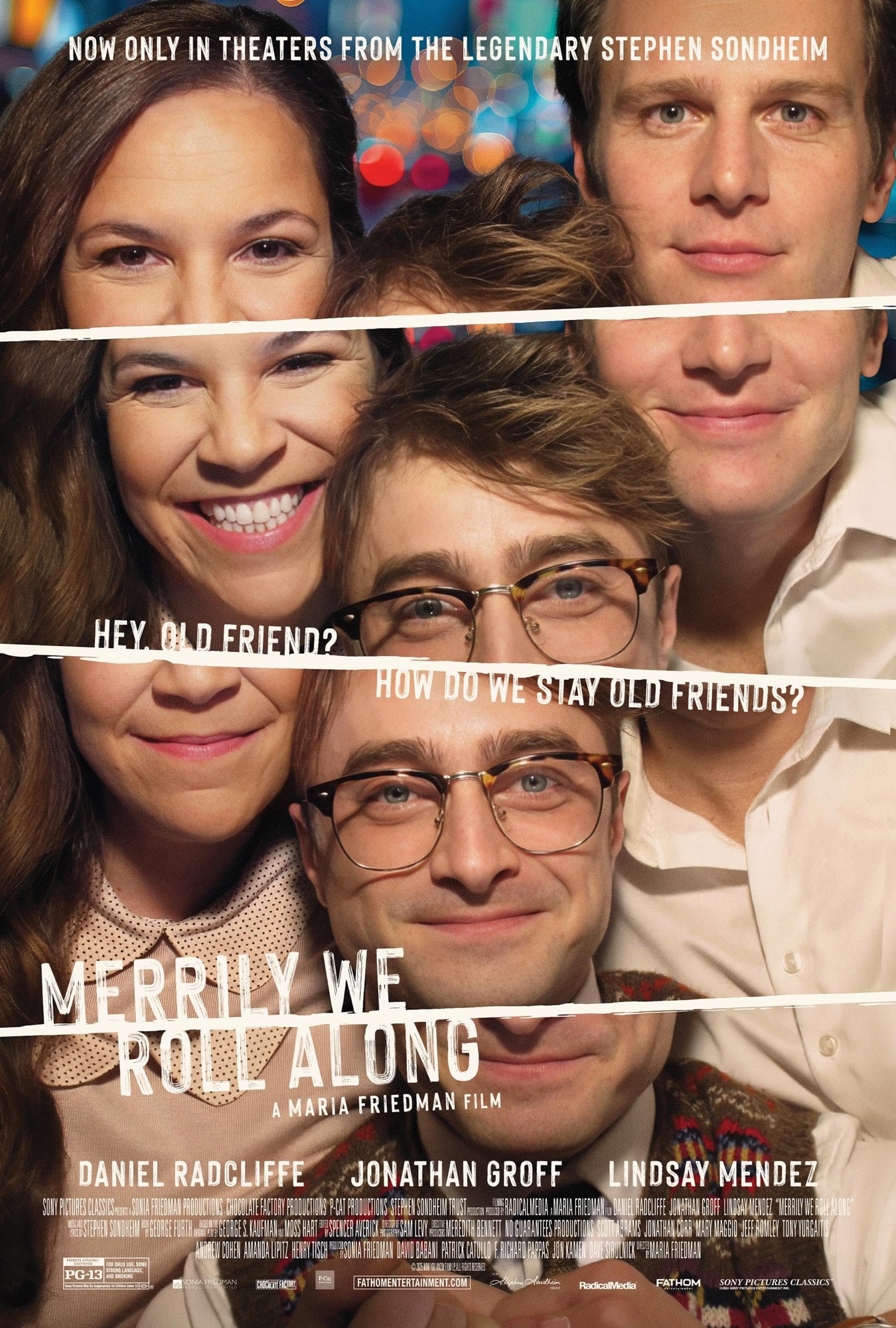


Maria Friedman’s Merrily We Roll Along is a heartfelt tribute to its source material. The film faithfully captures the essence of the musical, trying to keep its spirit alive. While it may be considered a decent adaptation of a fantastic musical, it still adds another meaningful piece to the Stephen Sondheim collection, which is always worth exploring. The story’s retrospective flow remains clear, and its emotional core endures, even when the film’s cinematic choices stumble a bit.
Jonathan Groff Frank Shepard really brings his A-game to the film, and his performance only gets more compelling as time goes on. At the 1976 opening-night party, he navigates through the Hollywood crowd with a charming ease that hints at underlying complexities. The subtle tension that appears when Charley’s name comes up shows a lot more than the words on the page. Friedman beautifully captures the glitzy yet fragile atmosphere of the room, though sometimes her close-up shots feel a bit tight, making it harder for the actors’ emotions to fully breathe.

Lindsay Mendez’s portrayal of Mary Flynn brings a heartfelt clarity to the unfolding of the story. Her heartfelt toast cuts through the superficial praise for Frank, allowing the movie to truly breathe in the deep pain that characterizes the musical. Friedman carefully lingers on this moment so the bitterness can settle in, though the editing sometimes feels a bit shaky, distracting from the slow, deliberate performance Mendez thoughtfully creates. Still, Mary’s sense of disillusionment stands out as one of the most authentic and touching parts of the film.
Daniel Radcliffe’s Charley Kringas steps into the 1973 television studio with a vibrant energy that truly lifts the film. His backstage frustration hits just right, and when he begins singing “Franklin Shepard, Inc.,” everything in the film falls perfectly into sync with the musical’s rhythm. By capturing this moment and sharing it with new audiences, Friedman has done something truly special and commendable. Radcliffe’s performance becomes a key moment that guides the film’s spirit, and for once, the camera steps back to give him the space he deserves, making the scene even more powerful.

The 1968 apartment sequence really adds depth to the film’s emotional landscape. Groff’s Frank, torn between his ambitions and the pieces of his former self, shares a peaceful moment at the piano before Gussie steps in, expressing her commitment. Krystal Joy Brown’s Gussie Carnegie brings a keen intelligence to the role, making her presence both captivating and a bit unsettling. The emotional tension builds nicely, though the editing briefly disperses the focus, which kind of softens the weight of the choices being made.
Katie Rose Clarke’s Beth Shepard beautifully captures the heartfelt intensity of the 1967 courthouse confrontation. Her voice reflects a woman’s lasting love for the man she has to part from, and Groff responds with a genuine rawness that heightens the emotional depth. Friedman lets the moment unfold naturally, allowing the film to momentarily rise above its visual restlessness. The sense of heartbreak comes through clearly, adding an extra layer of emotional resonance to the story.

The 1964 backstage celebration of Musical Husbands radiates pure joy. Charley and Frank’s excitement, Mary’s watchfulness, and Gussie’s subtle maneuvering all come together in a lively space full of promise. The film beautifully captures the thrill of creating something new, even though the camera sometimes gets a bit too close, which can soften the dynamic among the cast. Nevertheless, the vibrant energy of that moment shines through, reminding us of the magic and hope at the heart of the musical’s story.
The Sutton Place party in 1962 offers a fascinating glimpse into ambition and temptation. Gussie’s clever manipulation of Frank, Beth’s rising unease, and Charley’s mounting frustration all come together in an atmosphere charged with influence. The performance of “Good Thing Going” is heartfelt and tender, touching the audience before gradually fading into the guests’ indifference. Friedman captures this emotional turning point well, even though the fast-paced editing occasionally disrupts the scene’s natural flow.
The 1960 nightclub performance of “Bobby and Jackie and Jack” truly showcases the talented core trio. Griffith, Radcliffe, and Mendez delight us with their playful antics and vibrant charm, adding a joyful spark to the film. By capturing this scene, Friedman gives audiences, who might never get to see the stage, a wonderful glimpse of the magic. The chemistry among the trio shines through amid the busy visuals, allowing the film to breathe and feel more alive.
The rooftop scene in 1957 gently concludes the film with a warm, hopeful glow. Groff, Radcliffe, and Mendez stand together in the dawn of their dreams, as the march of time brings its deepest emotional impact. Friedman delicately eases her approach here, letting the story’s optimism shine through naturally. The film ends with a heartfelt promise that initially brought these characters together, and the lingering ache of what’s to come stays with us.
Maria Friedman’s Merrily We Roll Along is a heartfelt tribute to preservation. Even when the film’s cinematic style sometimes pulls focus from the touching core of this amazing play, it’s the performances and music that truly keep it alive. While it may not add much at times and might even take away a little, it still respects the spirit of Sondheim’s work and welcomes new audiences to step into its enchanting world.

Letter Grade: B+. On Netflix.


Leave a Reply