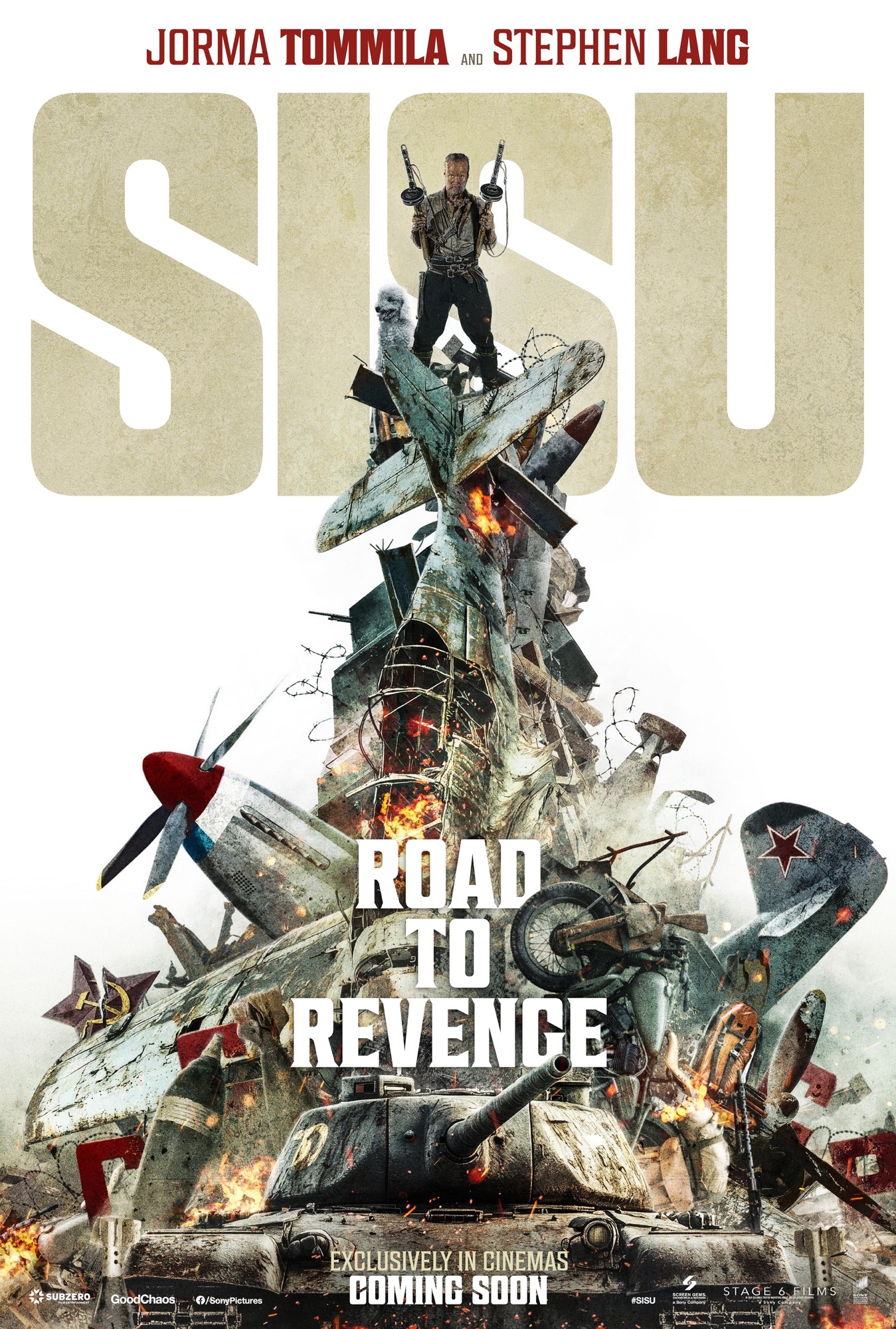


Jalmari Helander’s Sisu: The Road to Revenge returns to the Aatami Korpi myth with a swagger that borders on deranged confidence, and the result is a film that keeps tipping between brutality and giddy spectacle. Jorma Tommila carries the entire enterprise with a granite stillness that turns every gesture into a declaration of purpose. The film’s pleasures come from this tension: a story rooted in grief and homecoming that keeps erupting into explosions, airborne tanks, and a body count that grows with a kind of lunatic joy.

The film opens on Aatami dismantling the remains of his home in Karelia, loading the logs onto a truck, and setting out to rebuild somewhere safer. This insistence on carrying the past forward becomes the film’s emotional anchor. Every splintered beam and every log strapped to the truck becomes a reminder that revenge is only half the journey. The other half is the stubborn act of returning to a life that war tried to erase. Helander uses this physical burden to give the carnage a strange gravity, even when the action barrels into absurdity.

Once the Soviets unleash Stephen Lang’s Yeagor Draganov, the film shifts into a relentless pursuit. The plot beats are familiar, but Helander refuses to let them settle into routine. Each encounter escalates the violence until it becomes a kind of slapstick Rambo fantasia. A plane stunt that should be the climax arrives early, only to be overshadowed by tank acrobatics, airborne leaps, and a missile-assisted chase sequence that pushes the blood‑gore equation into a realm of self‑indulgent ultraviolence. The excess becomes its own joke, and the film leans into that joke with full commitment.

Tommila’s Aatami remains the still point in this storm. His silence never feels ornamental. It becomes a form of resistance, a refusal to let the world dictate the terms of his survival. When he spares Draganov early in the film, the moment lands with a cold weight that deepens once the truth of his family’s murder surfaces. The eventual confrontation on the train gains force because the film has spent so much time showing Aatami’s endurance rather than explaining it.

Stephen Lang, meanwhile, gives Draganov a theatrical menace that suits the film’s heightened tone. His Russian accent is a blunt instrument, but it fits the film’s appetite for audacity. He delivers one‑liners with a relish that turns villainy into performance art. Richard Brake, as the KGB officer who unleashes him, adds a thin layer of bureaucratic dread that sharpens the stakes without slowing the momentum.

The train sequence becomes the film’s most inventive stretch. Aatami’s crawl through the cars, knife embedded in his own flesh, turns into a grim procession of improvisation and endurance. The discovery of the missile and the decision to use it as propulsion is the moment the film fully embraces its own delirium. By the time Aatami launches the missile into Draganov, the film has crossed into a realm where logic gives way to pure cinematic impulse.

What keeps the film grounded is its return to the logs. After all the carnage, Aatami retrieves the remains of his home and carries them across the border. The gesture reframes the violence as a brutal detour rather than a destination. When the Finnish men arrive to help him rebuild, the film lands on a quiet acknowledgment of communal repair. The revenge is complete, but the home is the point.

Helander’s direction thrives on this balance between sincerity and spectacle. The film never apologizes for its excess, yet it keeps circling back to the idea that survival is more than endurance. It is the act of rebuilding, even when the world keeps tearing itself apart. The result is a mildly mixed yet mostly satisfying experience: a film that indulges in its own madness while still honoring the emotional core that drives its hero forward.

In the end, Sisu: The Road to Revenge becomes a delirium of popcorn pleasure, a blood‑spattered rampage that keeps finding small pockets of meaning amid the chaos. It is gloriously silly, audacious in its commitment to escalation, and anchored by a performance that refuses to let the spectacle swallow the story.

Letter Grade: B. On Netflix.


Leave a Reply