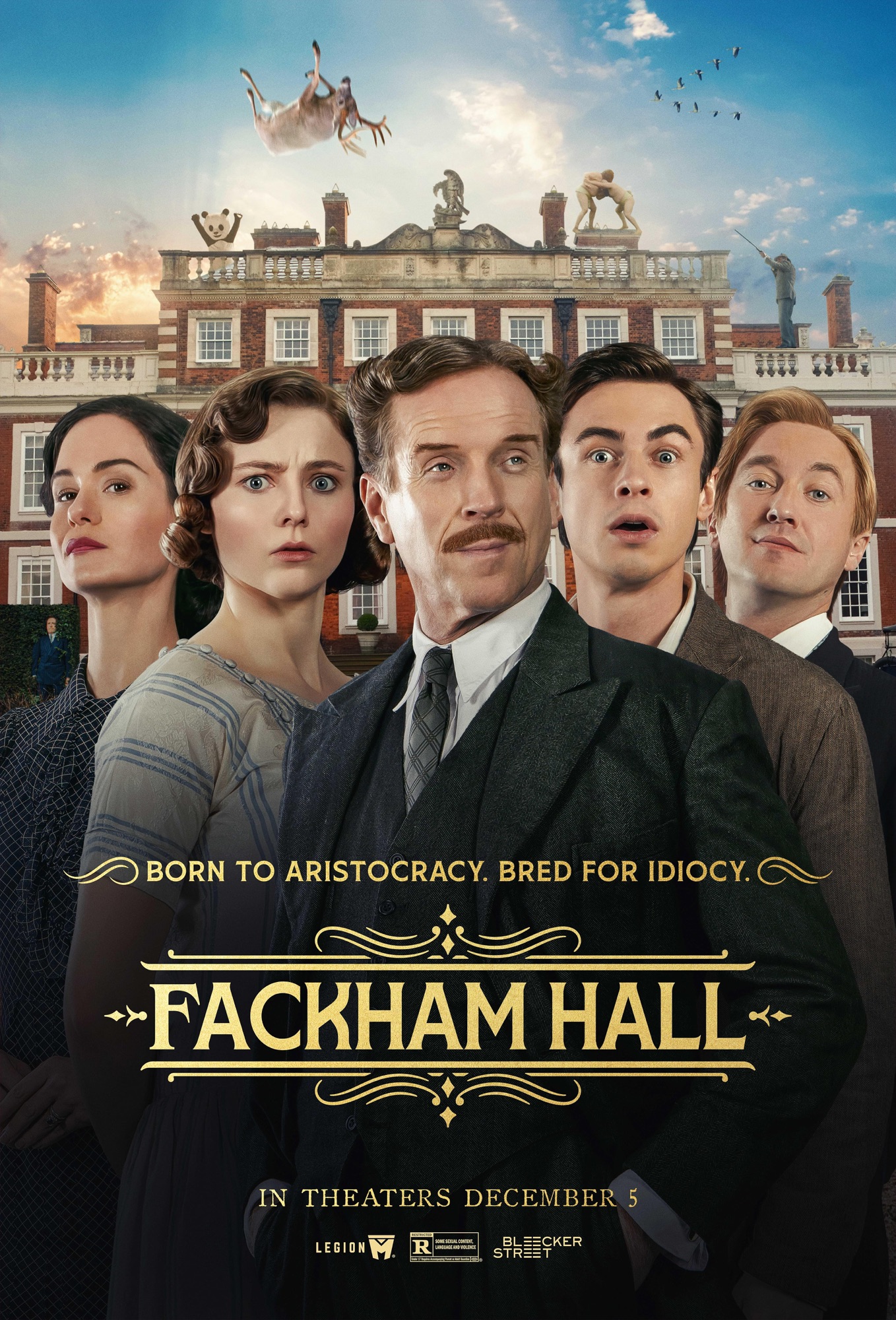


Jim O’Hanlon’s Fackham Hall arrives with the energy of a troupe determined to squeeze every last gag from the British period‑drama machine. It aims its satire squarely at the stately solemnity of Downton Abbey and the clipped procedural gravitas of Inspector Morse, then proceeds to yank every thread until the whole tapestry flutters in a draft of irreverence. The result is a featherweight paean to the genre’s fuss and frills, a film that wobbles between puerile and genuinely funny, often in the same breath.

Thomasin McKenzie anchors the chaos with a performance that understands the assignment: Rose Davenport must be both the ingénue of a country‑house romance and the straight face in a room full of eccentrics. McKenzie gives Rose a crisp intelligence that steadies the film whenever its jokes threaten to topple the furniture. Her scenes with Ben Radcliffe’s Eric Noone—thief, heir, and accidental hall boy—carry a spark that lifts the film beyond its barrage of punchlines.

The plot, involving mistaken identities, forbidden romances, and a murder that barely pauses the festivities, is almost beside the point. O’Hanlon treats narrative as a trampoline rather than a roadmap, bouncing from gag to gag with a speed that borders on manic. Yet the film’s willingness to treat its own story as a playground becomes part of its charm. The murder of Lord Davenport, the wrongful arrest of Eric, and the eventual revelation of his true parentage all function as scaffolding for the film’s real interest: puncturing the pomposity of British heritage drama.

The satire lands most sharply when the film skewers the upstairs‑downstairs dynamic. Katherine Waterston’s Lady Davenport embodies aristocratic hauteur with a brittle edge, while Anna Maxwell Martin’s Mrs. McAllister turns the housekeeper archetype into a nest of secrets and murderous impulses. Their scenes echo the stiff hierarchies of classic British television, only to twist them into absurdity. The film’s detective thread, led by Tom Goodman‑Hill’s Inspector Watt, riffs on the solemnity of Morse with deadpan interrogations that collapse into slapstick.

O’Hanlon’s direction leans into comic congestion. The movie seldom lets five seconds pass without a wisecrack, pratfall, or sight gag, sometimes all three stacked in a single beat. This relentlessness can flatten the rhythm, yet it also gives the film a buoyant, almost vaudevillian pulse. When the jokes land, they land with a satisfying thump. When they miss, the film simply sprints to the next one.

The cast’s commitment keeps the enterprise afloat. Radcliffe plays Eric’s earnestness against the absurdity around him, giving the character a sweetness that softens the film’s more juvenile impulses. Tom Felton’s Archibald is a puffed‑up caricature of aristocratic entitlement, and Emma Laird’s Poppy brings a bright, rebellious spark to the film’s romantic entanglements. Even the smaller roles—Jimmy Carr’s catastrophically timed vicar, Sue Johnston’s Great Aunt Bonaparte—add texture to the film’s comic ecosystem.

What elevates Fackham Hall beyond a simple spoof is its visual wit. The production design revels in anachronistic mischief, puncturing the illusion of period authenticity with a grin. The standout flourish is a “Trainspotting” dorm poster tacked in the servants’ quarters, a cheeky Gainsborough‑hat tip that crystallizes the film’s irreverent spirit. These visual jokes often outshine the dialogue, giving the film a playful density that rewards attention.

The film’s final stretch, involving Eric’s jailbreak, Mrs. McAllister’s confession, and the chaotic wedding showdown, embraces full farce. The epilogue, with its deadpan updates on each character’s fate, extends the film’s mock‑historical tone into a final burst of silliness. It is broad, messy, and entirely in keeping with the film’s ethos.

Fackham Hall never pretends to be more than a romp. Its satire is affectionate rather than barbed, its humor scattershot but spirited. When it works, it delivers a breezy antidote to the self‑seriousness of the genre it lampoons. When it falters, the cast’s verve and the film’s visual inventiveness keep it from sinking.

LETTER GRADE: B. On HBO Max.


Leave a Reply