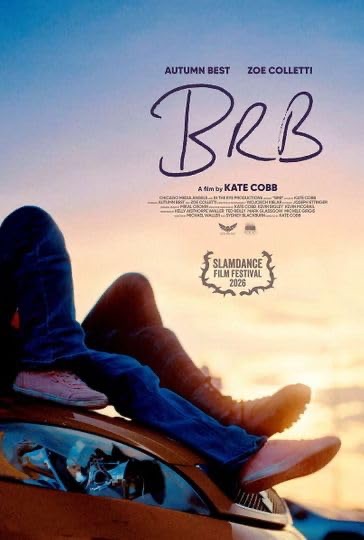


BRB opens in the era of dial‑up and away messages, a time when longing lived in the glow of a monitor. Sam, played by Autumn Best, chases the idea of a boy she met in a chatroom, but the film quickly reveals that the real journey is the one she takes with her older sister Dylan, played with brittle warmth by Zoe Colletti. Their road trip becomes a moving, uneven map of girlhood—its fractures, its tenderness, its private languages.
Director Kate Cobb uses the road‑trip structure as a kind of emotional centrifuge. Each stop, each detour, each argument spins Sam and Dylan closer to the truths they’ve been avoiding. The film’s honesty about sisterhood—its rivalries, its loyalties, its unspoken debts—gives the story its strongest pulse. Even when the comedy lands unevenly, the emotional clarity remains.
The film’s depiction of boyfriends and first crushes feels refreshingly unvarnished. Sam’s fixation on her online love is treated not as a punchline but as a sincere expression of early desire, the kind that feels enormous before the world teaches you to shrink it. Cobb resists the temptation to mock her protagonist; instead, she lets Sam’s yearning stand as a rite of passage.

Sibling rivalry threads through the film with a sharp, lived‑in texture. Dylan’s impatience, Sam’s defensiveness, their shared history of small betrayals—these moments accumulate into something quietly devastating. The film understands that sisters often hurt each other most deeply not out of malice, but out of proximity.
As adulthood looms, BRB captures the ache of realizing that the people you love cannot shield you from the world. The film’s best scenes are the ones where Sam and Dylan sit in the aftermath of their own mistakes, learning to see each other not as roles—older sister, younger sister—but as flawed, frightened, hopeful people.
Cinematographer Wojciech Kielar frames the American landscape as a series of emotional thresholds: gas stations glowing like lighthouses, motel rooms humming with fluorescent loneliness, highways stretching into the unknown. Joseph Ettinger’s editing keeps the film moving even when the narrative stumbles, giving the journey a restless, searching rhythm.
The supporting cast—Kevin Bigley as a bike cop, Cristian Lager, Beth Lacke, and others—add texture without overwhelming the central relationship. Their brief appearances feel like postcards from the world Sam is just beginning to enter.

If the film falters, it’s in its occasional reliance on familiar teen‑drama beats. But even these moments are softened by the film’s sincerity. Cobb and writers Sydney Blackburn and Michael Waller seem less interested in reinventing the genre than in grounding it in emotional truth.
In the end, BRB is a love letter to early internet girlhood, to the fragile bravado of adolescence, and to the sisters who shape us long before we understand what we owe them. It’s messy, tender, and quietly resonant—an imperfect film that still manages to leave a mark.
Letter Grade: B+.


Leave a Reply