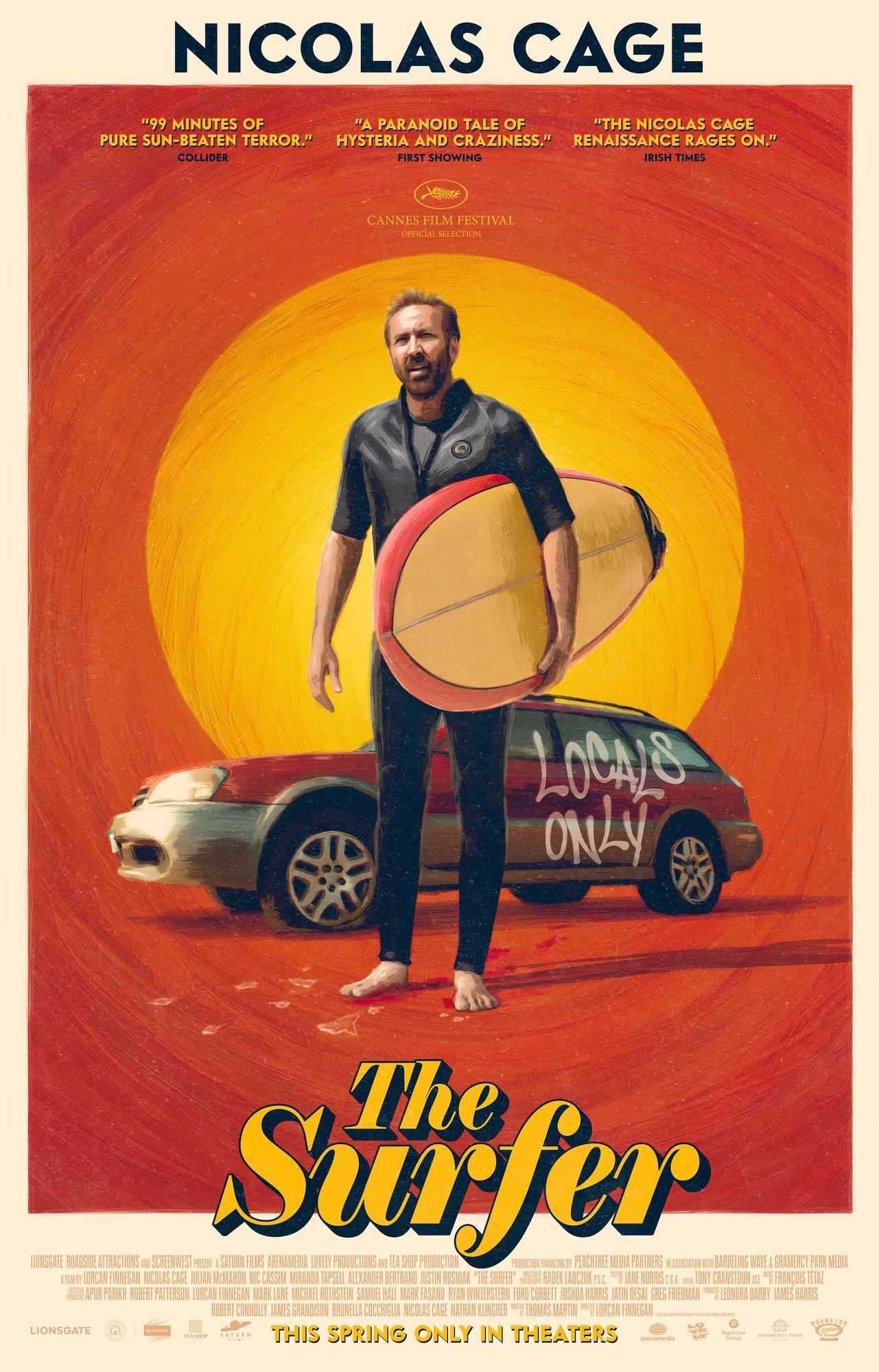


Lorcan Finnegan’s *The Surfer* is a psychological thriller that traps Nicolas Cage in a relentless nightmare, stripping him of his dignity, possessions, and sanity under the scorching Australian sun. What begins as a simple homecoming for Cage’s unnamed protagonist—a man returning to his childhood beach with his teenage son—quickly spirals into a surreal battle against a gang of territorial surfers, toxic masculinity, and his unraveling psyche.

Visually, *The Surfer* captivates with its striking yet minimalist aesthetic. The film predominantly confines itself to a desolate parking lot, transforming the asphalt into a purgatorial landscape where Cage’s character is subjected to relentless humiliations and challenges. The cinematography expertly captures the sun’s oppressive heat, amplifying the character’s sense of isolation and entrapment while a growing feverish delirium looms over the narrative.

As the character grapples with mounting dehydration, the film increasingly adopts a hallucinatory quality, skillfully blurring the boundaries between stark reality and the psychological torment he endures. This barren setting, stripped of any traditional action or vibrant spectacle, compels the audience to engage with the discomfort and desperation experienced by the protagonist, ultimately serving as a profound reflection of his inner turmoil. The deliberate pacing and stark visuals work in tandem to create a visceral experience.

Cage, as expected, delivers a performance that is both chaotic and deeply compelling. His transformation from a confident, well-dressed man to a sunburned, feral figure scavenging for food unfolds with excruciating detail. Few actors can embody desperation quite like Cage, and in this role, he fully embraces the absurdity of his situation with raw intensity. His interactions with the surf gang, particularly with Scally, are filled with tension as he shifts between defiance and submission. The film’s most grotesque moments—such as drinking filthy water and contemplating eating a rat—are portrayed with a sincerity that makes them even more unsettling.

*The Surfer* thematically explores masculinity, power, and the illusion of control. Cage’s character is convinced that reclaiming his childhood home will restore his sense of self. However, the film challenges this belief by illustrating how easily one’s status and security can be removed. The surf gang, characterized by their cult-like rituals and aggressive behavior, represents a distorted version of masculinity that thrives on dominance and exclusion. The film critiques this dynamic, revealing the fragility that lies beneath their bravado.

The pacing, especially in the second act, can feel repetitive as Cage’s suffering is drawn out to the point of exhaustion. While the film’s surreal elements add interest, they sometimes complicate the narrative, making it challenging to determine whether certain events are literal or symbolic.

Despite its flaws, *The Surfer* is a fascinating and unsettling experience. The film thrives on discomfort. While it may not be a conventional thriller, it creates an atmosphere of dread and existential horror, anchored by Cage’s fearless performance.

Final Grade: **B**. *The Surfer* is a bold and unsettling film that presents Cage in a raw and vulnerable state. Although its pacing and ambiguous elements may deter some viewers, the film’s exploration of masculinity and psychological decline makes it a compelling, albeit challenging, experience.


Leave a Reply